
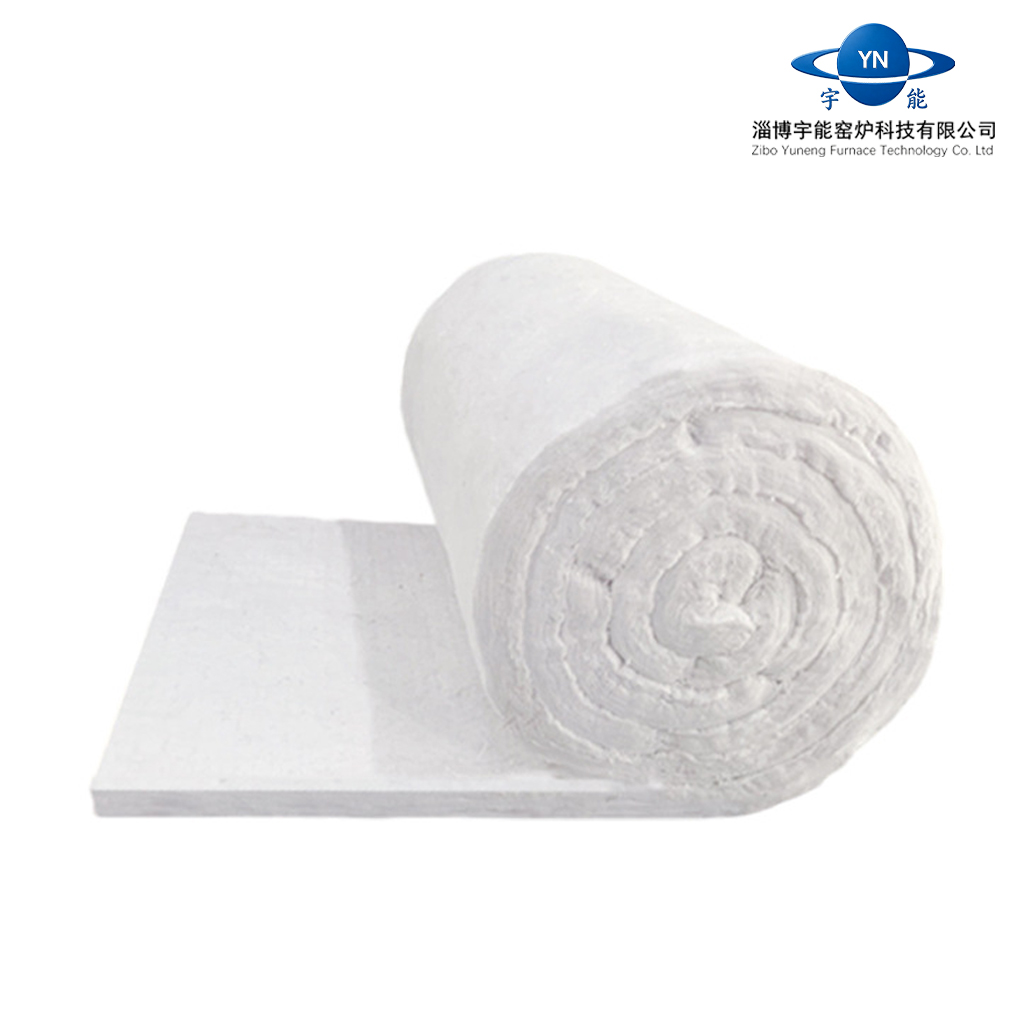
Lightweight Insulation Castable Reduce Kiln Heat Loss Effectively
Lightweight insulation castable is a high-performance refractory material designed to reduce kiln heat loss effectively while maintaining thermal stability, mechanical strength, and easy installation. In industries where energy efficiency, temperature control, and long service life matter, lightweight insulation castable has become an essential solution for kiln linings, furnace backup insulation, and high-temperature thermal protection systems.This article provides original, SEO-friendly, industry-focused information about lightweight insulation castable, including its definition, working principle, benefits, typical specifications, application areas, performance factors, selection guide, and maintenance considerations. The content is written in clear English and structured for direct use in blog pages, category pages, product education pages, and industry landing pages.---What Is Lightweight Insulation Castable?
Lightweight insulation castable is a type of refractory castable with low bulk density and low thermal conductivity. It is formulated to provide thermal insulation in high-temperature environments such as kilns, furnaces, boilers, incinerators, and heating equipment. Unlike dense refractory castables that focus mainly on wear resistance and structural strength, lightweight insulation castables are optimized to reduce heat transfer and improve energy efficiency.The material is usually made from lightweight aggregates, insulating fillers, binders, and special additives. After mixing with water, it can be poured, cast, pumped, or gunned into place. Once set and cured, it forms an insulating refractory lining that helps retain heat inside the kiln and reduce energy loss through the walls.In simple terms, lightweight insulation castable helps kilns stay hotter inside while keeping the outer shell cooler. This improves thermal efficiency, lowers fuel consumption, and supports more stable process temperatures.---Why Lightweight Insulation Castable Matters for Kiln Heat Loss Reduction
Kilns operate at high temperatures for long periods. Without effective insulation, a large amount of heat escapes through the lining, shell, and openings. This heat loss increases fuel usage, raises operating costs, and reduces temperature uniformity.Lightweight insulation castable reduces kiln heat loss effectively by creating a thermal barrier between the hot face and the kiln structure. Its low thermal conductivity slows down heat transfer, while its porous and lightweight structure traps air, which is a poor conductor of heat. As a result, less heat escapes, and the kiln can maintain the required temperature with lower energy input.The use of lightweight insulation castable is especially important in modern industries that focus on:- Energy saving- Emission reduction- Faster thermal response- Lower equipment surface temperature- Improved working environment- Extended refractory system life---How Lightweight Insulation Castable Works
The heat insulation effect of lightweight insulation castable comes from its internal structure and composition. Several mechanisms work together to reduce heat loss:1. Low Thermal Conductivity The material contains lightweight aggregates and microscopic pores that slow heat flow.2. Air Entrapment Air inside the pores acts as an insulating layer, reducing conductive heat transfer.3. Reduced Bulk Density Lower density means less solid material for heat to pass through.4. Multi-Layer Refractory Design Lightweight insulation castable is often used as a backup insulation layer behind a dense working lining, improving the overall thermal efficiency of the kiln.5. Stable Insulating Performance at High Temperatures Properly designed formulations retain insulating ability under continuous heat exposure.Because of these features, lightweight insulation castable is widely used where the goal is to conserve heat without adding excessive load to the furnace or kiln structure.---Main Advantages of Lightweight Insulation Castable
Lightweight insulation castable offers multiple benefits in kiln and furnace applications. These advantages make it a practical material for thermal insulation projects in many industries.| Advantage | Description ||---|---|| Reduces heat loss effectively | Helps retain heat inside the kiln and lowers thermal leakage || Saves fuel and energy | Reduces fuel consumption by improving thermal efficiency || Low bulk density | Easier handling and lower structural load on equipment || Good insulating performance | Provides strong resistance to heat flow || Easy installation | Can be cast into complex shapes and repair areas || Supports stable kiln temperature | Helps maintain more uniform heat distribution || Low outer shell temperature | Improves operator safety and equipment protection || Can be used in backup layers | Works well with dense refractories in layered systems || Suitable for many industrial units | Applicable in kilns, furnaces, incinerators, and thermal equipment || Helps reduce operating costs | Lower energy use and improved efficiency contribute to cost savings |These advantages make lightweight insulation castable a key material in modern refractory engineering.---Typical Composition of Lightweight Insulation Castable
Although formulations vary depending on service temperature and application, lightweight insulation castable generally contains the following components:- Lightweight aggregates such as expanded clay, perlite, vermiculite, or other porous refractory aggregates- Hydraulic binders that provide setting and strength- Fine insulating powders to fill voids and improve structure- Additives that improve workability, curing, and hot strength- Water for mixing and installationThe composition is carefully balanced to achieve low density, good insulation, and sufficient strength. In many cases, the material is designed as a non-load-bearing or semi-load-bearing insulating lining rather than a primary hot-face wear lining.---Common Types of Lightweight Insulation Castable
Lightweight insulation castable can be categorized by service temperature, binder system, and application purpose. Below are some common types used in the refractory industry.| Type | Main Feature | Typical Use ||---|---|---|| Low-temperature insulating castable | Excellent insulation at lower heat levels | Dryers, low-temperature furnaces, backup insulation || Medium-temperature insulating castable | Balanced insulation and strength | Kiln backup linings, thermal equipment || High-temperature insulating castable | Better heat resistance and structural stability | Hot zones and high-temperature backup layers || Calcium aluminate bonded castable | Good setting strength and refractory performance | General industrial insulation lining || Low-cement insulating castable | Improved density control and reduced heat conduction | Energy-efficient kiln systems || Ultra-lightweight castable | Extremely low density and strong insulating effect | Specialized thermal insulation applications |Selecting the right type depends on working temperature, kiln design, mechanical load, and thermal shock conditions.---Key Performance Properties
When choosing lightweight insulation castable to reduce kiln heat loss effectively, several technical properties should be considered.| Property | Importance ||---|---|| Bulk density | Lower density generally means better insulation and less structural load || Thermal conductivity | Lower value indicates better heat retention performance || Cold crushing strength | Measures mechanical strength at room temperature || Hot strength | Indicates stability under high-temperature service || Maximum service temperature | Defines the safe working temperature range || Linear change on heating | Shows shrinkage or expansion behavior during firing || Porosity | Higher porosity usually improves insulation but may reduce strength || Thermal shock resistance | Important for kilns with rapid temperature changes || Abrasion resistance | Needed if the lining may face gas flow or particle impact || Installation workability | Affects casting, pumping, and repair efficiency |These factors directly influence how well the material performs in real kiln conditions.---Typical Specification Table for Lightweight Insulation Castable
The following table gives a general industry reference. Actual values may vary by formulation and manufacturer grade.| Specification Item | Typical Range ||---|---|| Bulk density | 0.8–1.8 g/cm³ || Thermal conductivity at 350°C | 0.25–0.70 W/m·K || Cold crushing strength | 2–20 MPa || Service temperature | 800°C–1500°C || Permanent linear change | Controlled according to formulation || Water addition | 10%–20% || Drying time | Depends on thickness and ambient conditions || Installation method | Casting, pumping, or gunning || Lining thickness | Commonly 25–150 mm or more || Primary function | Thermal insulation and heat loss reduction |This table is useful for overview pages and technical blog content, especially when explaining product performance in a search-friendly format.---How Lightweight Insulation Castable Reduces Kiln Heat Loss Effectively
The phrase “reduce kiln heat loss effectively” is central to understanding the value of lightweight insulation castable. Heat loss in kilns occurs through conduction, convection, radiation, and leakage. Insulation castables help limit these losses in several ways:1. Slows Conductive Heat Transfer The porous structure reduces the movement of heat through the lining.2. Supports Multi-Layer Insulation Systems When installed behind a dense working lining, it decreases total wall heat flow.3. Lowers Shell Temperature Less heat reaches the outer kiln shell, improving energy retention.4. Reduces Hot Spot Risk Better insulation helps prevent localized overheating and shell damage.5. Improves Thermal Stability Stable temperature control means less fuel is needed to maintain process conditions.6. Enhances Energy Efficiency Reduced heat loss means more of the input energy is used for the process itself.Because of these functions, lightweight insulation castable is one of the most effective refractory materials for energy-saving kiln design.---Main Application Areas
Lightweight insulation castable is used in many thermal processing industries. Common application areas include:- Cement kilns- Lime kilns- Ceramic kilns- Glass furnace backup insulation- Metal heat treatment furnaces- Reheating furnaces- Incinerators- Boilers- Rotary kilns- Soaking pits- Thermal oxidizers- Petrochemical heating unitsIt is usually applied as backup insulation, non-wearing hot-face support, or intermediate thermal barrier depending on the furnace structure and process conditions.---Typical Kiln and Furnace Uses
| Application | Purpose of Lightweight Insulation Castable ||---|---|| Cement kiln | Reduce shell temperature and improve thermal efficiency || Ceramic kiln | Maintain stable firing temperature and reduce fuel usage || Lime kiln | Improve energy retention in high-temperature zones || Rotary kiln | Insulate shell areas and reduce heat leakage || Reheating furnace | Support thermal efficiency during long heating cycles || Heat treatment furnace | Improve temperature control and reduce operating cost || Incinerator | Help retain heat for stable combustion || Boiler insulation area | Reduce heat loss around high-temperature surfaces |This type of material is often selected as part of an energy-saving refractory system.---Advantages Over Dense Castables in Insulation Zones
Dense refractory castables are excellent for abrasion resistance and direct flame exposure, but they are not always the best choice for insulation zones. Lightweight insulation castable offers clear advantages where heat retention matters more than high wear resistance.| Comparison Point | Lightweight Insulation Castable | Dense Castable ||---|---|---|| Bulk density | Lower | Higher || Thermal conductivity | Lower | Higher || Heat insulation | Better | Moderate || Structural load | Lower | Higher || Fuel saving | Better | Lower insulation efficiency || Wear resistance | Moderate to low | Higher || Best use | Backup insulation, thermal barrier | Hot face, wear zones |In many kiln systems, both materials are used together to achieve the best balance of durability and energy efficiency.---Selection Guide for the Right Product Grade
To choose the best lightweight insulation castable, consider the following factors:1. Operating Temperature The product must match or exceed the actual kiln temperature.2. Location in the Lining Hot-face, backup, and outer shell areas require different performance levels.3. Mechanical Stress Areas with impact, vibration, or abrasion may need stronger grades.4. Thermal Cycling Frequency Rapid heating and cooling can affect durability.5. Installation Conditions Some projects require manual casting, while others may use pumping or gunning.6. Energy Efficiency Target Higher insulation performance may justify lower mechanical strength in non-load-bearing zones.7. Drying and Curing Constraints Thick linings may require carefully controlled drying to prevent cracking.A proper selection process helps ensure long-term heat loss reduction and reliable kiln operation.---Installation and Curing Considerations
Proper installation is essential for achieving the full insulating performance of lightweight insulation castable. Even a good material can fail if it is not mixed, placed, and dried correctly.Basic Installation Steps
- Clean the substrate thoroughly- Prepare formwork if casting in place- Mix with the correct amount of water- Place and compact evenly- Avoid excessive vibration that may segregate lightweight particles- Cure under suitable temperature and humidity conditions- Dry out slowly before full heat-upImportant Notes
- Too much water can reduce strength and increase porosity beyond the optimal range- Improper drying may cause steam pressure, cracking, or spalling- Thick sections should be heated gradually- Installation quality has a direct effect on thermal conductivity and service lifeA well-installed lightweight insulation castable lining can significantly reduce kiln heat loss effectively over long service periods.---Common Factors Affecting Heat Insulation Performance
The actual performance of lightweight insulation castable depends on several practical factors:| Factor | Influence on Performance ||---|---|| Density | Lower density usually improves insulation || Thickness | Thicker linings reduce heat transfer more effectively || Moisture content | Excess moisture increases initial heat loss during drying || Installation quality | Poor compaction or cracks reduce insulation value || Working temperature | Higher temperatures may increase heat flow || Surface condition | Cracks and erosion can weaken thermal protection || Lining design | Multi-layer designs often perform better than single-layer systems |These variables should be considered during design and maintenance.---Energy Efficiency and Cost Benefits
Using lightweight insulation castable in kiln systems can provide strong economic benefits. These benefits often justify the material choice even when the initial cost is higher than basic insulation products.| Benefit Area | Result ||---|---|| Fuel economy | Lower fuel consumption || Heat retention | Improved thermal efficiency || Equipment protection | Cooler shell surfaces and reduced metal stress || Maintenance savings | Less damage from overheating and reduced repair frequency || Production stability | More consistent kiln temperatures || Environmental impact | Lower energy use and reduced emissions |For industrial operations, reducing heat loss effectively is not only a technical objective but also a cost control strategy.---Maintenance and Service Life Tips
To maximize the life of lightweight insulation castable and maintain low heat loss performance, regular inspection is recommended.- Check for cracks, delamination, or surface damage- Monitor shell temperature changes- Inspect insulation thickness during shutdowns- Repair damaged sections early- Avoid thermal shock from abrupt heating and cooling- Keep lining dry before startup- Use proper expansion design where neededGood maintenance helps preserve insulation performance and extends furnace and kiln service life.---FAQ: Lightweight Insulation Castable
1. What is the main purpose of lightweight insulation castable?Its main purpose is to reduce heat loss effectively in kilns, furnaces, and other high-temperature equipment.
2. Is lightweight insulation castable a hot-face refractory?Usually no. It is commonly used as a backup insulating layer rather than the primary wear-resistant hot face.
3. Does it help save fuel?Yes. By lowering thermal conductivity and reducing shell heat loss, it helps improve fuel efficiency.
4. Can it be used in high-temperature kilns?Yes, but only if the selected grade matches the working temperature and service conditions.
5. Is it easy to install?Yes. It is generally installed by casting, pumping, or gunning, depending on project needs.
6. What makes it different from dense castable?The key difference is lower density and better thermal insulation, while dense castable usually offers higher mechanical strength and wear resistance.
---SEO-Friendly Summary
Lightweight insulation castable is a practical refractory solution designed to reduce kiln heat loss effectively. With low bulk density, low thermal conductivity, and excellent insulating performance, it helps improve energy efficiency, lower fuel consumption, and maintain stable kiln temperatures. It is widely used in cement kilns, ceramic kilns, rotary kilns, heat treatment furnaces, incinerators, and many other high-temperature systems.As an insulating refractory material, lightweight insulation castable offers clear advantages in backup lining applications, thermal barrier systems, and energy-saving kiln designs. Its selection should be based on service temperature, installation conditions, mechanical requirements, and thermal performance goals.For industrial users seeking better thermal efficiency, reduced operating costs, and improved heat retention, lightweight insulation castable remains one of the most effective materials available.---Keyword-Rich Closing Paragraph
If your goal is to reduce kiln heat loss effectively, improve thermal insulation, and support long-term energy saving, lightweight insulation castable is a highly valuable refractory material. Its lightweight structure, insulating properties, and versatility make it suitable for many kiln and furnace systems. Whether used in backup insulation, thermal barrier lining, or high-temperature equipment protection, lightweight insulation castable helps optimize heat retention, reduce energy waste, and improve overall operating efficiency.---If you want, I can also turn this into:1. a more HTML-ready version with headings, tables, and schema-friendly formatting, or 2. a product category page version with stronger SEO structure and meta title/meta description suggestions.


本网站使用 cookie 来确保您在我们的网站上获得最佳体验。

 English



 Whatsapp
 电话
电话
评论
(0)