
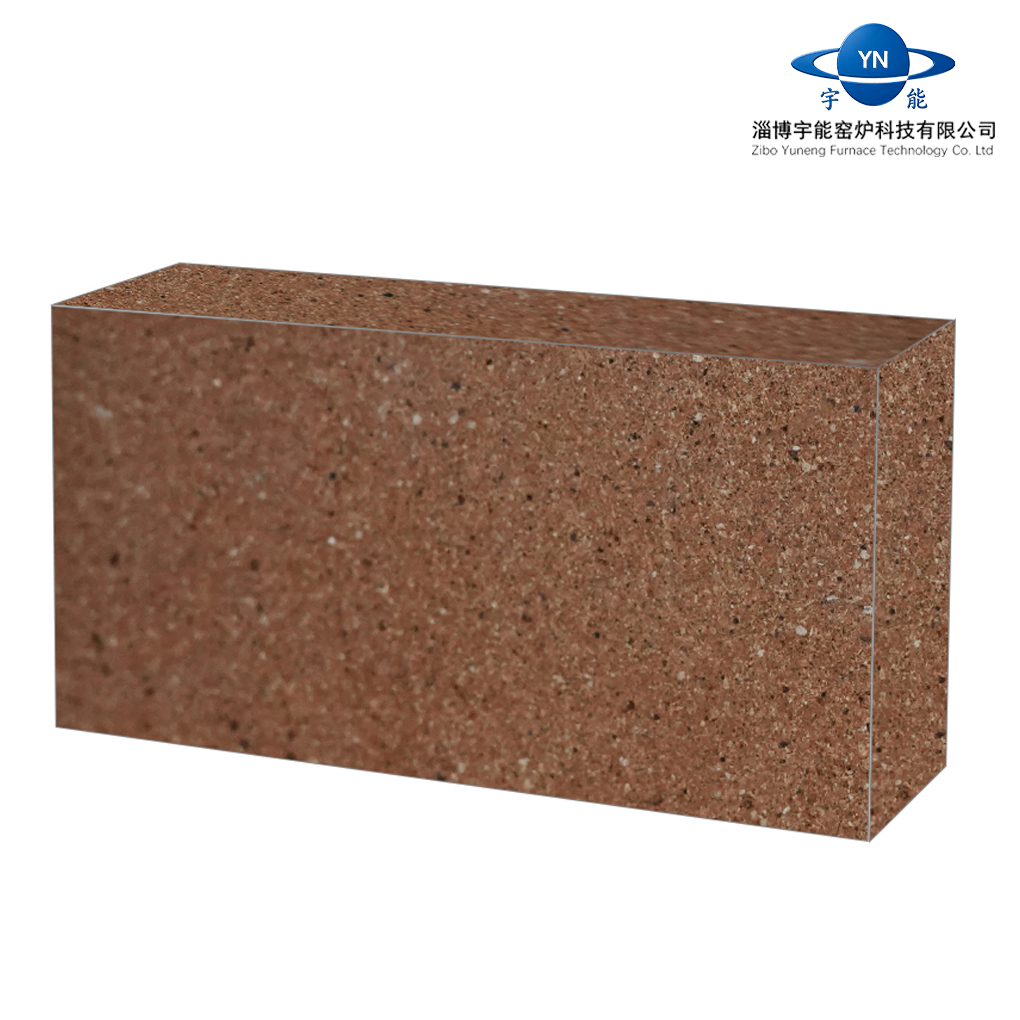
Lightweight mullite brick is a high-performance refractory material designed for applications that require
low thermal conductivity, high refractoriness, reduced heat loss, and strong thermal
stability under extreme operating conditions. It is widely used in industrial furnaces, kilns, thermal treatment
equipment, and high-temperature insulation systems where energy efficiency and durable heat resistance are essential.
For industries seeking a balance between lightweight insulation and excellent refractoriness,
lightweight mullite brick offers a practical solution. Its internal porous structure, stable mullite crystal phase,
and low bulk density help reduce heat transfer while maintaining the structural integrity needed for demanding
high-temperature environments. Because of these characteristics, lightweight mullite brick has become a preferred
refractory choice in many energy-saving and high-temperature applications.
This page provides a detailed overview of lightweight mullite brick, including its definition, properties,
advantages, common specifications, applications, and selection considerations. The information below is intended
for use in industry pages, blog articles, product category pages, and SEO content focused on refractory insulation
materials.
Lightweight mullite brick is a type of insulating refractory brick made primarily from mullite-based raw materials
and processed to achieve a porous, low-density structure. Mullite itself is a highly valued aluminosilicate mineral
known for its excellent thermal stability, low thermal expansion, good creep resistance, and strong mechanical
performance at elevated temperatures.
Compared with dense refractory bricks, lightweight mullite brick is engineered to provide better thermal insulation
and lower heat storage. This makes it especially useful in lining layers where conserving energy is more
important than withstanding direct heavy abrasion or severe mechanical impact. In many furnace linings, lightweight
mullite brick is used as backup insulation or as part of a multi-layer refractory system.
The key value of lightweight mullite brick lies in its combination of low thermal conductivity and
high refractoriness. This means it can resist high temperatures without melting or deforming easily,
while also limiting heat transfer through the lining system. As a result, industrial equipment can operate more
efficiently, with less energy loss and improved temperature control.
In high-temperature industrial processes, heat loss is one of the major factors affecting fuel consumption, operating
cost, and process stability. Lightweight mullite brick helps reduce this heat loss by forming a strong thermal barrier.
Its porous internal structure traps air pockets, and air is a poor conductor of heat. This lowers the overall thermal
conductivity of the brick and helps improve insulation performance.
At the same time, not all insulation bricks can survive in extreme heat. Many low-density materials lose strength,
shrink excessively, or fail under prolonged exposure to high temperatures. Lightweight mullite brick is different.
It retains good refractoriness, meaning it can maintain its structure and function under demanding thermal conditions.
This is why it is widely used in industries that require both insulation and heat resistance.
| Feature | Description | Practical Benefit |
|---|---|---|
| Low Thermal Conductivity | Reduces heat transfer through the refractory lining | Improves thermal efficiency and lowers energy loss |
| High Refractoriness | Maintains stability under high-temperature conditions | Supports long-term use in furnaces and kilns |
| Lightweight Structure | Lower bulk density than dense refractory bricks | Reduces furnace load and improves insulation |
| Good Thermal Shock Resistance | Handles temperature changes with less cracking risk | Useful in cyclic heating and cooling environments |
| Stable Mullite Phase | Contains mullite crystalline structure for heat resistance | Enhances structural stability at elevated temperatures |
| Low Heat Storage | Absorbs less heat than dense refractories | Speeds up furnace startup and saves fuel |
One of the most important advantages of lightweight mullite brick is its low thermal conductivity. In high-temperature
systems, every layer of heat insulation matters. By reducing heat transfer through the lining, lightweight mullite brick
helps conserve energy and maintain stable furnace temperatures.
Lower thermal conductivity can also reduce surface temperatures on furnace shells, which may improve safety and lower
the thermal stress on outer structures. In energy-intensive industries, even a small reduction in heat loss can
generate meaningful operational savings over time.
Lightweight mullite brick is not simply an insulating material; it is also a refractory product with high temperature
resistance. This allows it to perform in applications where ordinary insulating materials may fail. The mullite phase
is especially important because it remains stable at very high temperatures and helps preserve brick shape and integrity.
Because it is lighter than dense refractory brick, lightweight mullite brick reduces the overall weight of furnace
linings. This can be useful in equipment design, structural load management, and installation efficiency. Lower weight
may also reduce stress on supporting structures and improve build flexibility.
Thermal efficiency is a major reason why lightweight mullite brick is used in modern industrial insulation systems.
When heat stays inside the working chamber rather than escaping through the lining, the furnace uses less fuel and
reaches operating temperatures more effectively. This is especially important in batch furnaces, tunnel kilns, and
periodic heating systems.
Many industrial furnaces do not operate at a constant temperature. They heat up, cool down, and repeat this cycle
frequently. Lightweight mullite brick generally provides good thermal shock resistance, which helps minimize cracking
and premature failure caused by repeated temperature fluctuations.
In many systems, lightweight mullite brick is used as an insulating backup layer behind denser working linings.
This layered design combines the abrasion resistance of dense materials with the insulation performance of lightweight
materials, creating a more efficient and durable furnace structure.
The exact properties of lightweight mullite brick vary depending on composition, porosity, manufacturing process,
and target application. However, the following ranges are commonly associated with industrial-grade lightweight
mullite brick.
| Property | Typical Range | Remarks |
|---|---|---|
| Bulk Density | 0.6 - 1.3 g/cm³ | Lower density usually means better insulation |
| Cold Crushing Strength | 1 - 6 MPa | Depends on density and manufacturing method |
| Thermal Conductivity | 0.2 - 0.8 W/m·K | Varies with temperature and porosity |
| Refractoriness | Above 1600°C | Suitable for high-temperature insulation |
| Service Temperature | 1400°C - 1700°C | Depends on grade and application |
| Apparent Porosity | Higher than dense bricks | Contributes to low thermal conductivity |
| Thermal Shock Resistance | Good | Useful in cyclic heating applications |
| Al2O3 Content | Varies by grade | Higher alumina often improves refractoriness |
Lightweight mullite brick is available in different grades and dimensions to meet various furnace design requirements.
The following table shows a general reference format often used in product descriptions and technical documentation.
| Specification Item | Common Option | Usage Note |
|---|---|---|
| Standard Shape | Rectangular brick | Most common for industrial lining work |
| Custom Shape | Special-shaped brick | Used for arches, corners, and complex structures |
| Length | 230 mm / custom | Can vary by project and furnace design |
| Width | 114 mm / custom | Often adjusted for lining thickness |
| Thickness | 65 mm / custom | Depends on insulation and structural needs |
| Density Grade | Ultra-light, standard-light | Selected based on heat loss target |
| Temperature Grade | Low, medium, high | Chosen according to service environment |
| Surface Finish | Plain or machined | Machined bricks may improve installation accuracy |
The manufacturing process of lightweight mullite brick generally involves careful raw material selection, batching,
mixing, forming, drying, and high-temperature firing. The production method strongly influences density, porosity,
strength, and thermal insulation performance.
High-quality mullite raw materials, alumina sources, and silica-based materials are selected according to the target
grade. The balance between alumina and silica is important because it affects the final mullite phase formation and
heat resistance.
Materials are mixed with binders, pore-forming agents, and additives that help generate a controlled porous structure.
This step is critical for achieving low density and low thermal conductivity while retaining enough strength for
industrial use.
The mixture is pressed, cast, or otherwise shaped into brick form. Accurate forming helps maintain size consistency
and improves installation quality in furnace construction.
After forming, the bricks are dried to remove moisture. Controlled drying is necessary to prevent cracking and
distortion before firing.
The bricks are fired at high temperature to form the mullite crystalline phase and create the final structural
properties. Firing conditions influence porosity, shrinkage, and refractoriness.
Lightweight mullite brick is widely selected for systems that require heat containment, stable performance, and
efficient insulation. Below are some of the major performance benefits in practical use.
| Performance Area | Benefit | Industrial Impact |
|---|---|---|
| Heat Insulation | Reduces heat transfer through furnace walls | Lowers fuel consumption |
| Temperature Control | Helps retain internal heat more effectively | Improves process consistency |
| Structural Stability | Maintains shape under high heat | Supports longer service life |
| Energy Efficiency | Minimizes heat loss to the outside environment | Reduces operating costs |
| Installation Design | Works well in layered lining systems | Provides flexible refractory engineering |
Lightweight mullite brick is used across many high-temperature industries because of its effective combination of
insulation and refractoriness. Its applications typically focus on areas where moderate mechanical stress and high
thermal load must be managed at the same time.
One of the most common uses is in furnace linings, especially as an insulating layer. It helps reduce heat loss
while supporting the overall thermal design of the furnace.
Lightweight mullite brick is suitable for kilns, annealing furnaces, and heat treatment systems where consistent
temperature retention is important. The low thermal conductivity helps improve heating efficiency and reduce cycle time.
In some petrochemical and metallurgical environments, lightweight mullite brick is used in non-wear, high-temperature
zones where insulation performance is critical. It may serve as part of a backup layer or thermal barrier.
Ceramic production depends heavily on precise temperature management. Lightweight mullite brick helps maintain stable
hot zones and lower heat loss, making it useful in many ceramic kiln designs.
Certain power generation and energy systems also require high-temperature insulation materials. Lightweight mullite
brick can be used where refractory insulation and thermal stability are both needed.
Understanding the difference between lightweight mullite brick and dense refractory brick can help users select the
right material for a specific furnace or thermal system.
| Comparison Factor | Lightweight Mullite Brick | Dense Refractory Brick |
|---|---|---|
| Bulk Density | Lower | Higher |
| Thermal Conductivity | Lower | Higher |
| Refractoriness | High | High to very high |
| Mechanical Strength | Moderate | Higher |
| Heat Storage | Lower | Higher |
| Main Function | Insulation and heat retention | Direct wear resistance and structural support |
In many applications, the best strategy is not choosing one material exclusively, but combining both. Dense bricks are
often used as hot-face materials, while lightweight mullite brick is used behind them to improve insulation and reduce
heat loss.
Choosing the right lightweight mullite brick requires considering both the thermal environment and the mechanical
conditions of the application. The following factors are commonly evaluated.
The service temperature must match or exceed the expected furnace temperature. A proper temperature margin is important
for long-term reliability.
If the main goal is heat insulation, lower thermal conductivity is usually preferred. However, the designer must also
balance insulation with sufficient strength.
Lightweight mullite brick is best used in areas with limited direct load or wear. If the application involves heavy
abrasion or impact, a denser refractory product may be necessary in the hot-face layer.
Repeated heating and cooling can affect service life. Materials with better thermal shock resistance are preferred
when operating cycles are frequent.
Brick dimensions, shape, and tolerance should align with the furnace design. Proper installation helps maximize
insulation performance and minimize gaps or thermal bridges.
From an industry content perspective, lightweight mullite brick is a strong keyword topic because it combines several
high-intent search phrases, including lightweight mullite brick, low thermal conductivity refractory,
high refractoriness insulation brick, mullite refractory brick, and
high temperature insulation material. These terms are often searched by engineers, buyers, kiln designers,
and procurement teams.
When creating blog posts, category pages, or technical landing pages, it is useful to naturally integrate these terms
throughout the content. Search engines favor clear structure, semantic relevance, and useful explanatory material.
Therefore, a well-organized page with definitions, tables, and application information can perform well for both users
and SEO.
It may be suitable in certain high-temperature zones, but its use depends on the specific grade, mechanical load,
and furnace design. In many systems, it is used behind the hot face rather than as the primary wear-resistant surface.
Mullite provides excellent thermal stability, low expansion, and high-temperature strength. These traits make it one
of the most important crystal phases in advanced refractory products.
Generally, lower density improves insulation by increasing porosity and trapping more air. However, the material must
still retain enough strength and refractoriness for safe performance.
Yes. By lowering heat loss through the lining, it can help reduce fuel use and improve thermal efficiency. The exact
energy savings depend on furnace design, insulation thickness, and operating conditions.
Lightweight mullite brick is a valuable refractory insulation material that combines low thermal conductivity,
high refractoriness, lightweight structure, and strong thermal stability. It is widely used in
high-temperature industries where reducing heat loss and improving energy efficiency are major priorities.
Its main strengths include:
For industrial users, lightweight mullite brick is an effective solution when the goal is to improve heat management
without sacrificing the refractoriness required in demanding furnace environments. Whether used in kilns, furnaces,
or thermal processing systems, it remains an important material in modern refractory engineering.
```



本网站使用 cookie 来确保您在我们的网站上获得最佳体验。

 English



 Whatsapp
 电话
电话
评论
(0)