
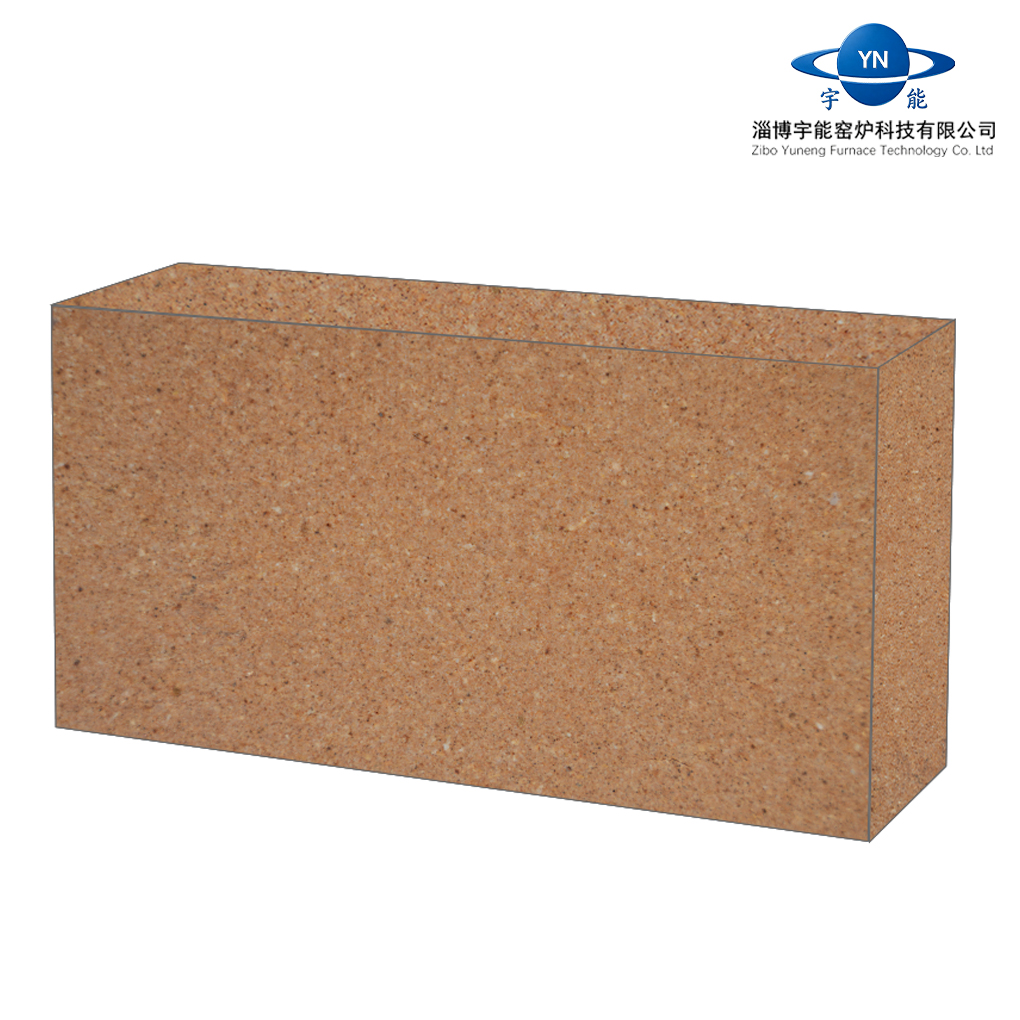
Lightweight mullite insulation brick is a high-temperature refractory and thermal insulation material widely used in
industrial furnaces, kiln linings, heat treatment systems, and energy-saving thermal equipment. It combines
low thermal conductivity, low bulk density, stable high-temperature performance, and excellent refractoriness,
making it a preferred choice for heat preservation applications where both insulation efficiency and thermal
durability are required.
This type of insulating refractory brick is designed to reduce heat loss, improve furnace efficiency, and lower
operating energy consumption. Compared with dense refractory bricks, lightweight mullite insulation brick offers
significantly lower weight and better insulation performance while still maintaining sufficient mechanical strength
and resistance to high temperatures. For industries that demand reliable heat preservation under severe thermal
conditions, mullite-based insulation bricks provide an effective balance of performance and economy.
Lightweight mullite insulation brick is a porous refractory insulation product made primarily from mullite-based
raw materials. Mullite is a rare and highly valued aluminosilicate mineral known for its excellent thermal stability,
low thermal expansion, and high refractoriness. In brick form, mullite is engineered into a lightweight structure
that contains controlled porosity, allowing the brick to act as both a refractory lining and a heat insulating layer.
The main purpose of a lightweight mullite insulation brick is heat preservation. It is installed in furnace walls,
roofs, and backup insulation layers to minimize thermal loss and improve temperature uniformity. Because of its
superior performance at elevated temperatures, it is widely used in applications where conventional insulation
materials would fail or degrade too quickly.
The popularity of lightweight mullite insulation brick comes from its combination of physical and thermal properties.
These properties make it suitable for continuous high-temperature service in demanding industrial environments.
| Property | Typical Performance | Function in Heat Preservation |
|---|---|---|
| Bulk Density | Usually around 0.5–1.4 g/cm³ | Reduces structural load and improves insulation efficiency |
| Refractoriness | High, suitable for elevated temperature use | Maintains performance in furnace and kiln environments |
| Thermal Conductivity | Low | Minimizes heat transfer and heat loss |
| Thermal Shock Resistance | Good to excellent | Withstands rapid temperature changes |
| Compressive Strength | Moderate | Supports lining structure while remaining lightweight |
| Porosity | High and controlled | Improves insulation and reduces density |
| Linear Shrinkage | Low at high temperature | Preserves dimensional stability during service |
| Alumina Content | Typically high | Enhances refractoriness and thermal stability |
Heat preservation is one of the most critical factors in industrial thermal systems. Any unnecessary heat loss results
in higher fuel consumption, reduced production efficiency, unstable process temperature, and increased maintenance
costs. Lightweight mullite insulation brick helps solve these problems by acting as an efficient thermal barrier.
Its low thermal conductivity slows the movement of heat through furnace walls and roof structures. At the same time,
its refractory nature ensures that the brick remains stable even at high operating temperatures. This combination is
especially valuable in hot-face backup linings, where the material must protect outer layers from extreme thermal
exposure while conserving energy.
In modern high-temperature industry, energy-saving and emission-reduction goals are increasingly important. Using
lightweight mullite insulation brick can help reduce fuel usage, improve thermal efficiency, and contribute to more
sustainable production systems.
The exact raw material formulation may vary depending on the intended temperature range and application. However,
lightweight mullite insulation brick is generally produced from mullite, alumina, clay-based materials, and other
refractory constituents. The structure is engineered to create a balance between insulation performance and
refractoriness.
| Component | General Role |
|---|---|
| Mullite | Provides high refractoriness, thermal stability, and low expansion |
| Alumina | Improves high-temperature resistance and structural strength |
| Clay or Plastic Raw Materials | Supports shaping and bonding during manufacturing |
| Porosity Formers | Create controlled pores to reduce density and thermal conductivity |
| Binders | Help form stable brick bodies before and after firing |
| Mineral Additives | Adjust firing behavior, shrinkage, and performance characteristics |
Lightweight mullite insulation brick is manufactured through a controlled process that focuses on achieving low
density, uniform pore distribution, and high-temperature stability. Although different producers may use different
technical methods, the general manufacturing flow usually includes raw material preparation, batching, mixing,
shaping, drying, and high-temperature firing.
The quality of the firing process is particularly important. Proper firing improves mullite crystal formation and
helps determine final properties such as refractoriness, compressive strength, and thermal insulation performance.
The following table presents general industry reference values. Actual specifications may vary according to production
method, density grade, and application requirements.
| Specification | Typical Range |
|---|---|
| Product Type | Lightweight mullite insulation brick |
| Material Base | Mullite, alumina, refractory clay, porous additives |
| Bulk Density | 0.5–1.4 g/cm³ |
| Cold Crushing Strength | Moderate, dependent on density grade |
| Thermal Conductivity | Low |
| Maximum Service Temperature | Commonly used in high-temperature furnace insulation systems |
| Permanent Linear Change | Low |
| Color | Light yellow, white, or off-white |
| Shape | Standard brick, special shape, or customized form |
| Surface | Smooth or slightly porous |
Furnace efficiency depends heavily on how well the system retains heat. If heat escapes through the lining, the
equipment requires more energy to maintain the desired internal temperature. Lightweight mullite insulation brick
reduces this loss by forming an effective thermal barrier.
In many furnace designs, insulation bricks are used behind the working lining or in upper-temperature zones to reduce
shell temperature and protect steel structures. Because the material is lightweight, it also helps reduce the total
weight of the refractory system, which can improve design flexibility and reduce installation stress.
The result is better thermal efficiency, more stable internal heat distribution, and lower operating costs.
These are major reasons why industries continue to use lightweight mullite insulation brick in modern heat
preservation systems.
Lightweight mullite insulation brick is used in a wide range of high-temperature industrial applications. Its
combination of insulation and refractoriness makes it suitable for both direct and backup lining positions.
| Industry/Application | Typical Use |
|---|---|
| Metallurgical Furnaces | Backup insulation and heat preservation in high-temperature zones |
| Ceramic Kilns | Thermal insulation layers for firing equipment |
| Heat Treatment Furnaces | Energy-saving lining systems and furnace roof insulation |
| Glass Industry | Insulation for thermal chambers and furnace support areas |
| Petrochemical Equipment | High-temperature insulation in process heating systems |
| Power and Energy Systems | Thermal insulation for boilers and heat-processing units |
| Incinerators | Heat-resistant insulation for combustion chambers |
| Laboratory Furnaces | Precision thermal insulation in controlled environments |
Lightweight mullite insulation brick is often compared with other insulation materials such as lightweight clay brick,
lightweight high alumina brick, and fiber-based insulation products. Each material has its own advantages, but
mullite insulation brick is especially valued where both high refractoriness and stable insulation are needed.
| Material Type | Insulation Performance | Refractoriness | Typical Advantage |
|---|---|---|---|
| Lightweight Mullite Insulation Brick | Excellent | High | Balanced insulation and high-temperature stability |
| Lightweight Clay Brick | Good | Lower than mullite | Economical insulation for moderate temperatures |
| Lightweight High Alumina Brick | Good to very good | Very high | Strong high-temperature resistance |
| Ceramic Fiber Insulation | Excellent | High | Very low weight and flexible installation |
Compared with fiber insulation, lightweight mullite insulation brick offers greater structural rigidity and is better
suited for applications requiring a rigid refractory lining. Compared with ordinary insulating bricks, it offers higher
refractoriness and improved long-term thermal stability.
When selecting lightweight mullite insulation brick for industrial use, several technical factors should be considered.
The right choice depends on furnace temperature, atmosphere, mechanical load, and service life requirements.
Lightweight mullite insulation brick is designed for durability, but proper furnace operation and maintenance are
still essential for maximizing service life. Avoiding thermal shock, preventing mechanical impact, and maintaining
proper expansion joints can significantly improve lining performance.
During shutdown inspections, users should check for cracking, spalling, loose joints, or surface damage. If the lining
shows excessive wear, replacement or repair may be necessary to restore insulation efficiency. Proper installation is
equally important, since poor jointing or uneven brickwork can create heat leakage paths.
Energy conservation is a major advantage of lightweight mullite insulation brick. By reducing heat loss, it lowers
the energy demand of industrial heating systems and contributes to more efficient resource use. In many operations,
improved insulation can reduce fuel consumption, shorten heating cycles, and support better emissions control.
Because industrial enterprises increasingly focus on sustainable manufacturing, materials that combine refractoriness
with thermal insulation are becoming more important. Lightweight mullite insulation brick supports this trend by
helping equipment operate with less wasted heat and better overall thermal management.
For SEO and industry reference purposes, the following keyword phrases are commonly associated with this product type:
Its main function is heat preservation. It reduces heat loss in high-temperature equipment while providing stable
refractory performance.
Yes. It is widely used in furnaces, kilns, and thermal equipment where high refractoriness and insulation are needed.
Mullite offers excellent thermal stability, low expansion, and high temperature resistance, making it ideal for
refractory insulation applications.
Yes. Its low thermal conductivity helps reduce heat loss, improve furnace efficiency, and lower fuel consumption.
Yes. It is commonly used as a backup lining or insulating layer behind hot-face refractory materials.
Lightweight mullite insulation brick is a high-performance refractory insulation material designed for heat
preservation in demanding industrial environments. With its low density, low thermal conductivity, and high
refractoriness, it provides an effective solution for furnace insulation, energy saving, and long-term thermal
stability. It is widely used in metallurgical, ceramic, glass, petrochemical, and thermal processing industries
where efficient heat retention is essential.
For industrial users seeking a reliable insulating refractory brick, lightweight mullite insulation brick remains
one of the most practical choices available. Its combination of durability, insulation efficiency, and high-temperature
resistance makes it highly suitable for modern heat preservation systems and energy-conscious furnace design.



本网站使用 cookie 来确保您在我们的网站上获得最佳体验。

 English



 Whatsapp
 电话
电话
评论
(0)