
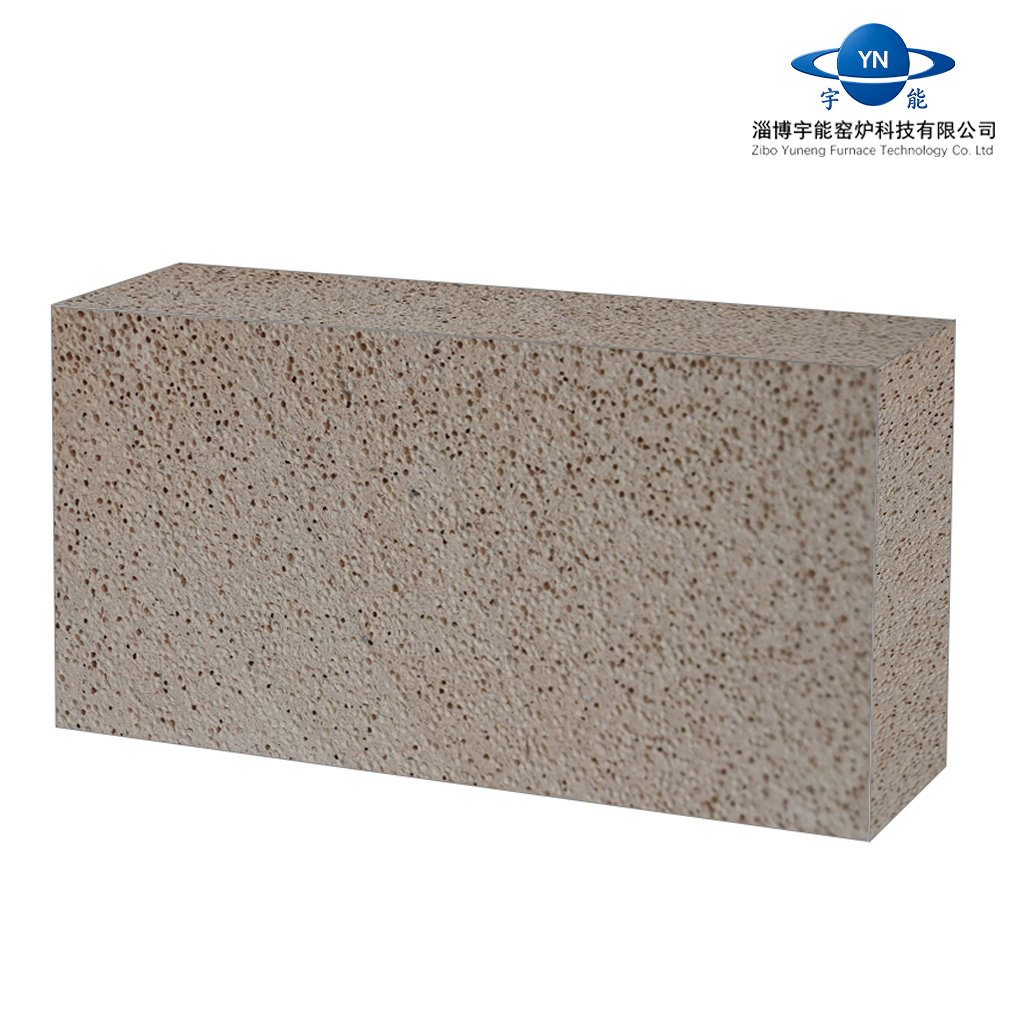
Mullite Large Cutting Brick for High Temperature Industrial Use is a specialized refractory material designed for demanding thermal environments where stability, durability, and dimensional precision are essential. In high temperature industrial applications, refractory bricks must resist heat, thermal shock, mechanical load, corrosion, and long-term service wear. Mullite large cutting brick is widely valued because it combines excellent high temperature performance with reliable structural strength and good resistance to deformation. For industries that operate furnaces, kilns, incinerators, heaters, and other thermal equipment, this type of refractory brick is an important component for achieving stable operation and reducing maintenance frequency.
As a high-performance refractory product, mullite large cutting brick is typically made from mullite-based raw materials or alumina-silica compositions with a high mullite phase content. The material structure provides a balance of low thermal expansion, strong thermal shock resistance, and excellent refractory strength. The “large cutting” format refers to customized or oversized brick shapes produced by cutting or machining, which allows installation in complex furnace designs and large thermal systems. This makes mullite large cutting brick especially suitable for industrial users seeking precision fit, efficient lining construction, and dependable long-term service at elevated temperatures.
Mullite large cutting brick is a refractory brick manufactured from mullite or mullite-rich ceramic materials and shaped into large or custom-cut dimensions according to industrial design requirements. Mullite is a stable aluminosilicate mineral with high refractoriness, low creep, and excellent resistance to thermal stress. When processed into large cutting brick forms, it becomes suitable for furnace linings, hot zone insulation structures, and other high temperature components where standard brick sizes may not meet engineering needs.
In practical use, mullite large cutting brick is selected when an industrial heating system requires:
The product is commonly used in areas exposed to continuous high heat, intermittent cycling, and chemical attack from flue gases, slag, or combustion byproducts. Compared with ordinary firebrick, mullite large cutting brick provides stronger resistance to deformation and better performance in severe thermal conditions.
Mullite is one of the most respected refractory phases in industrial ceramics because of its excellent thermal and mechanical characteristics. It is formed under high temperature conditions and has a unique crystal structure that contributes to high strength and low expansion. This makes it especially suitable for applications where repeated heating and cooling cycles can damage less stable materials.
In high temperature industrial use, refractory materials must do more than simply resist heat. They must also maintain shape, protect surrounding structures, and reduce heat loss while enduring mechanical and chemical stress. Mullite large cutting brick meets these requirements by offering:
These properties make mullite large cutting brick an effective choice for industries that depend on precise thermal control and reliable furnace lining performance.
Mullite large cutting brick offers several major advantages that make it highly attractive for industrial users. These benefits are important not only for refractory performance but also for operating efficiency, maintenance planning, and total lifecycle cost.
Mullite large cutting brick is capable of withstanding very high service temperatures. It performs well in continuous thermal environments where conventional clay bricks may begin to weaken, deform, or crack. This makes it suitable for the hot face and structural zones of industrial furnaces and kilns.
Thermal shock occurs when a refractory material experiences rapid temperature changes. Because mullite has a low coefficient of thermal expansion and excellent crystal stability, large cutting brick made from mullite can handle repeated heating and cooling better than many alternative materials.
Creep refers to slow deformation under load at elevated temperatures. A good mullite large cutting brick maintains shape and structural integrity even when exposed to heavy thermal and mechanical stress for extended periods.
The large cutting format allows the brick to be adapted to specific furnace dimensions and engineering drawings. This improves lining accuracy, reduces installation complexity, and minimizes gaps that can lead to heat loss or weak points.
Mullite refractory brick has solid resistance to many industrial atmospheres, including oxidizing environments and certain corrosive vapors. This is useful in applications where chemical attack can shorten refractory life.
Due to its durability and stability, mullite large cutting brick can extend furnace campaign life and lower replacement frequency. This is one of the main reasons it is preferred in high temperature industrial systems.
Mullite large cutting brick is used across a wide range of industries that operate under high heat. Its performance characteristics make it suitable for both continuous and intermittent thermal processing equipment.
| Industry / Equipment | Typical Use of Mullite Large Cutting Brick | Performance Benefit |
|---|---|---|
| Ceramic kilns | Hot zone lining, structural lining, burner areas | Stable heat resistance and improved kiln durability |
| Glass furnaces | High temperature structural sections and furnace lining support | Resistance to thermal load and heat deformation |
| Steel industry furnaces | Refractory lining in heat treatment and reheating systems | Improved thermal shock resistance and service stability |
| Non-ferrous metal furnaces | Protective lining in high temperature zones | Better resistance to heat and process stress |
| Incinerators | Combustion chamber lining and hot surface protection | Strong resistance to rapid temperature variation |
| Heat treatment furnaces | Wall lining, roof lining, and structural components | Long-term thermal stability and reduced maintenance |
| Boiler and thermal equipment | Insulating and refractory sections exposed to high heat | Heat retention and mechanical durability |
| Chemical thermal systems | Refractory protection in corrosive high heat environments | Better service reliability in aggressive conditions |
The performance of mullite large cutting brick depends heavily on its composition and microstructure. In general, the brick contains a high proportion of mullite phase, which is a stable alumina-silica compound. Depending on the manufacturing route, the brick may also include controlled amounts of alumina, silica, and selected binders to improve density, strength, and machinability.
The internal structure of mullite refractory brick is typically characterized by:
For large cutting applications, structural consistency is especially important. A brick with irregular density or unstable shrinkage behavior may not perform reliably after cutting or shaping. High-quality mullite large cutting brick is designed to preserve strength and surface integrity even when custom dimensions are required.
The specifications of mullite large cutting brick vary based on application, furnace design, and project requirements. The following table provides typical reference values for general industry use. Actual values may differ depending on production method and required service environment.
| Specification Item | Typical Range / Value | Notes |
|---|---|---|
| Material type | Mullite-based refractory ceramic | May include high-alumina or alumina-silica formulations |
| Color | Light yellow, white, beige, or off-white | Depends on raw materials and firing process |
| Bulk density | Approximately 2.2–2.7 g/cm³ | Varies with grade and porosity |
| Apparent porosity | Low to medium | Lower porosity often improves strength and corrosion resistance |
| Cold crushing strength | High, depending on grade | Important for installation and load-bearing use |
| Refractoriness | Very high | Suitable for severe thermal environments |
| Maximum service temperature | Commonly above 1500°C | Exact limit depends on product type and furnace atmosphere |
| Thermal shock resistance | Good to excellent | One of the key advantages of mullite brick |
| Thermal conductivity | Moderate to low | Useful for heat retention and energy efficiency |
| Shape | Large cutting, custom-cut, special-shaped | Produced according to drawing or project specification |
One of the main reasons industrial buyers choose mullite large cutting brick is the ability to customize dimensions. Standard refractory bricks may not fit complex structures, curved furnace walls, burner ports, or specialized thermal chambers. Large cutting bricks solve this issue by allowing precise dimensional matching.
Typical size options may include:
In industrial refractory engineering, shape accuracy can significantly improve installation efficiency. Properly cut mullite brick can reduce mortar thickness, improve lining tightness, and provide a more stable thermal barrier. This is particularly beneficial in systems where heat leakage must be minimized and refractory gaps must be controlled.
Furnace performance depends on lining quality, insulation behavior, and resistance to thermal stress. Mullite large cutting brick helps optimize these factors by creating a durable refractory layer that protects the furnace structure from extreme heat. When properly installed, it contributes to improved operational consistency and lower energy loss.
Key performance contributions include:
In many high temperature industrial use cases, the furnace lining is one of the most critical components for uninterrupted production. The use of mullite large cutting brick can help create a more dependable lining system and reduce the risk of hot spot damage or premature failure.
To understand the value of mullite large cutting brick, it is helpful to compare it with other common refractory materials used in high temperature industrial applications.
| Refractory Type | Main Strengths | Main Limitations | Best Use Case |
|---|---|---|---|
| Clay brick | Low cost, general furnace use | Lower high temperature performance | Moderate heat applications |
| High alumina brick | Good strength, high refractoriness | May have lower thermal shock resistance than mullite in some cases | Industrial furnaces and kilns |
| Silica brick | Excellent creep resistance in specific environments | Limited thermal shock resistance and special use conditions | Roof areas in selected furnace designs |
| Mullite brick | Strong thermal shock resistance, stability, high heat tolerance | Typically higher cost than basic firebrick | High temperature and cycling environments |
| Mullite large cutting brick | All mullite advantages plus custom dimensions and reduced joints | Requires custom planning and precise engineering | Special high temperature industrial systems |
The large cutting format is more than a sizing option; it is a practical engineering advantage. In refractory construction, every joint, seam, and cut line can influence lining performance. By using larger and custom-cut mullite brick, industrial installers can reduce the number of joints and improve the overall integrity of the lining system.
Important installation benefits include:
In large furnaces or kilns, the ability to install custom-shaped refractory brick can significantly improve project efficiency. It also supports better long-term thermal performance by minimizing weak points in the lining structure.
Choosing the right mullite large cutting brick for high temperature industrial use requires attention to technical and operating conditions. Not every furnace or kiln needs the same grade, size, or density. The following factors are often considered in industrial selection:
Selecting the correct refractory brick helps ensure stable operation, lower replacement cost, and improved process reliability. For best results, the brick specification should match the engineering design of the thermal system.
The service life of mullite large cutting brick depends on several operating and environmental factors. Even a high-quality refractory material can experience faster wear if it is used outside its optimal range.
| Performance Factor | Impact on Brick Life | Recommended Consideration |
|---|---|---|
| Temperature stability | Stable temperatures improve longevity | Avoid extreme overheating beyond design limits |
| Thermal cycling | Frequent rapid cycling can cause cracks | Use mullite brick for environments needing shock resistance |
| Mechanical load | High loading can cause deformation if misapplied | Match strength grade to structural demand |
| Chemical exposure | Corrosive gases or ash may shorten life | Evaluate furnace atmosphere before selection |
| Installation quality | Poor installation weakens lining performance | Ensure accurate cutting, alignment, and mortar use |
| Maintenance practices | Regular inspection prevents major damage | Monitor hot spots, cracks, and joint wear |
For industrial buyers, engineers, and procurement teams searching online, clear technical content improves visibility and trust. SEO-friendly content about mullite large cutting brick for high temperature industrial use helps users quickly understand product function, applications, specifications, and advantages. Detailed industry pages also support stronger search relevance for related keyword combinations such as:
Search engines favor pages that provide useful, structured, and semantically rich information. A well-organized article with headings, tables, and relevant technical language can help improve indexing and support long-tail keyword rankings. For this reason, using descriptive content about mullite large cutting brick can be valuable for blogs, category pages, and product information sections.
When building content around this topic, the following terms are commonly used in the refractories and industrial ceramics sector:
| Keyword | Search Intent | Relevance |
|---|---|---|
| Mullite large cutting brick | Product-specific search | Primary keyword |
| High temperature industrial use | Application-based search | Strong contextual keyword |
| Mullite refractory brick | Material search | Core industry term |
| Custom refractory brick | Shape and size search | Useful for engineering pages |
| Furnace lining brick | Application search | Important for thermal equipment content |
| Heat resistant brick | General product search | Broad discovery keyword |
| Thermal shock resistant brick | Performance search | High-value technical keyword |
| Industrial refractory solutions | Solution search | Supports category and guide pages |
Mullite Large Cutting Brick for High Temperature Industrial Use is a high-performance refractory solution designed for demanding thermal applications where durability, stability, and custom sizing are important. With excellent resistance to heat, thermal shock, and deformation, it is widely used in furnaces, kilns, incinerators, and other industrial heating systems. The large cutting format provides installation flexibility and helps improve lining integrity in complex structures.
For industrial users seeking a reliable refractory material with strong technical performance, mullite large cutting brick offers a practical balance of heat resistance, structural strength, and long service life. Its relevance across many sectors makes it a valuable topic for technical blogs, catalog pages, and SEO-focused industrial content. By presenting clear specifications, common applications, and performance advantages, a well-structured page on mullite large cutting brick can support both search visibility and user understanding.
```



本网站使用 cookie 来确保您在我们的网站上获得最佳体验。

 English



 Whatsapp
 电话
电话
评论
(0)