
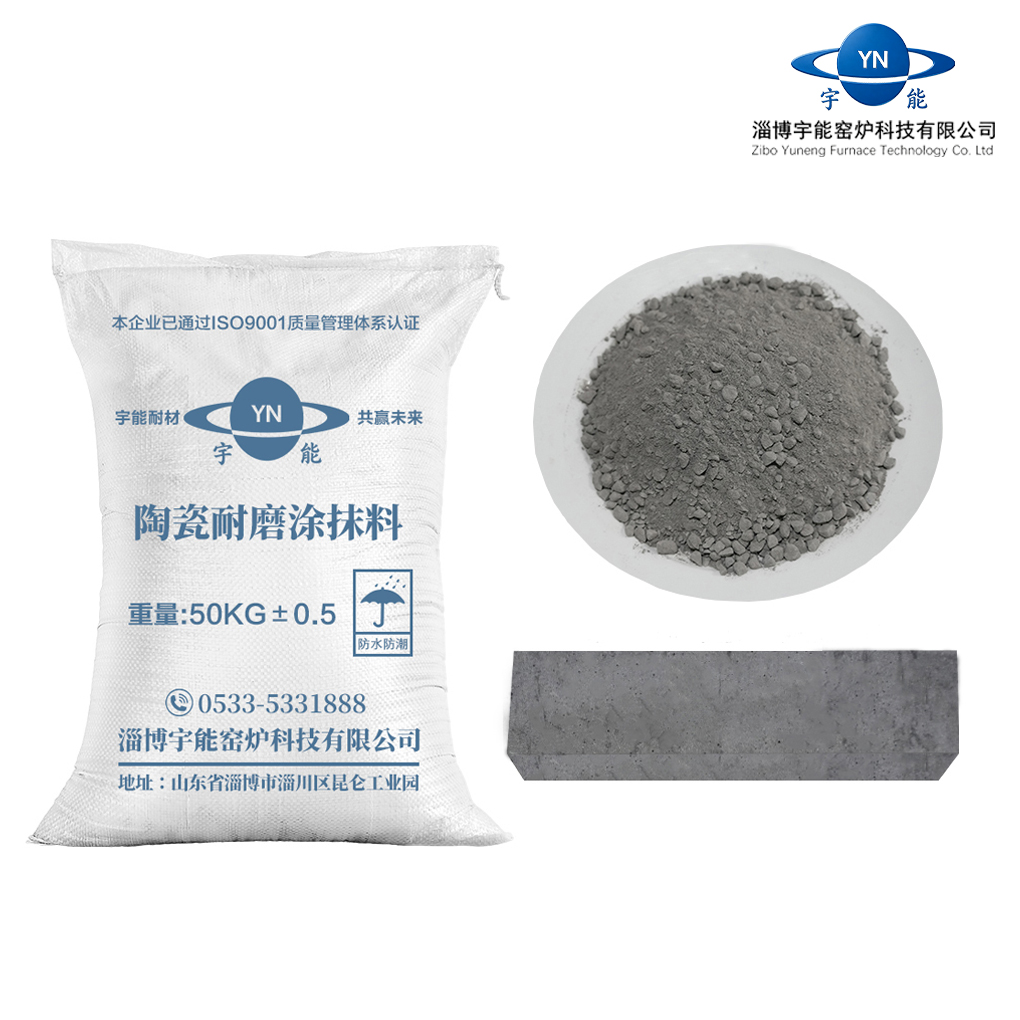
Refractory plastic is a dense, moldable, and highly durable refractory material designed for
furnace repair, lining maintenance, patching, and hot-face restoration in high-temperature
industrial environments. When users search for refractory plastic,
high bond strength refractory, or refractory for furnace repair,
they are often looking for a practical material that combines strong adhesion, excellent
resistance to thermal shock, and reliable performance under intense heat. This page provides
a detailed, SEO-friendly, industry-focused overview of refractory plastic, including its
definition, main properties, common applications, technical specifications, advantages, and
selection guidance.
In furnace repair projects, the quality of the repair material directly affects service life,
shutdown frequency, maintenance cost, and operational safety. Refractory plastic is widely used
because it can be installed in a semi-plastic form, compacted into position, and then hardened
into a strong refractory lining. Its high bond strength helps it adhere well to existing
refractory structures, making it especially suitable for patching damaged areas, rebuilding
worn zones, and restoring furnace surfaces without full replacement.
Refractory plastic is a shaped refractory mixture made from carefully selected aggregates,
refractory powders, binders, plasticizing agents, and sometimes reinforcing additives. It is
typically supplied in a workable plastic state, allowing installers to ram, tamp, or press it
into damaged furnace sections, burner blocks, walls, roofs, troughs, and other high-temperature
areas.
Unlike dry refractory castables that require mixing with water before placement, refractory
plastic is often supplied in a ready-to-use or semi-ready state. This makes it especially useful
for furnace repair work where fast installation, excellent contact with the substrate, and
strong mechanical bonding are important. After installation, the material is dried, heated,
and fired in service to form a durable, heat-resistant lining.
The term high bond strength refractory refers to a product that can develop
strong adhesion and structural integrity after installation. In furnace repair, high bond
strength is essential because repaired areas must resist vibration, thermal cycling, impact
loads, and the stress generated by repeated heating and cooling.
Furnace repair is not only about filling a damaged area. It is about restoring the performance
of a high-temperature system while minimizing downtime. Refractory plastic offers several
benefits that make it a preferred furnace repair material:
In industries where furnaces operate continuously or at very high temperatures, repair materials
must perform reliably under aggressive conditions. Refractory plastic is engineered to provide
structural stability, heat resistance, and good service life in these demanding environments.
| Feature | Typical Benefit | Why It Matters in Furnace Repair |
|---|---|---|
| High bond strength | Strong adhesion to existing lining | Reduces repair failure and material separation |
| Plastic workability | Easy shaping and compaction | Ideal for irregular furnace damage |
| Thermal shock resistance | Withstands rapid temperature changes | Useful in cyclic furnace operation |
| High refractoriness | Maintains structure at elevated temperatures | Supports long-term furnace performance |
| Wear resistance | Resists abrasion and erosion | Important in high-velocity gas and particulate zones |
| Dense structure | Lower porosity and stronger body | Improves durability and slag resistance |
Refractory plastic works by combining refractory raw materials with binding systems that allow
the mix to remain moldable during installation and then harden after drying and heating. The
material is compacted into the repair area to ensure intimate contact with the existing lining
or furnace shell interface. This close contact is one of the reasons refractory plastic is known
for its high bond strength.
After installation, the material is normally air-dried or controlled dried to remove moisture
and volatile components. During initial heating, the binder system develops its final mechanical
strength. Once in service, the lining becomes a robust refractory layer capable of withstanding
demanding furnace conditions.
Because furnace repair often involves local damage, hot spots, edge deterioration, or spalling,
the ability of refractory plastic to be pressed firmly into place gives it a major advantage
over less conformable materials.
Refractory plastic can be formulated for different service temperatures and operating
environments. The exact composition depends on the application, but common industry types
include:
| Type | Main Composition | Typical Use |
|---|---|---|
| Alumina-based refractory plastic | High-alumina aggregates and binders | General furnace repair and wear zones |
| Fireclay refractory plastic | Fireclay aggregates and plastic binders | Moderate-temperature lining repair |
| Silica-based refractory plastic | High-silica refractory raw materials | Specific furnace areas exposed to silica-compatible service conditions |
| High-strength refractory plastic | Selected aggregates with enhanced bonding system | Heavy-duty repair zones requiring stronger mechanical performance |
| Low-cement plastic formulations | Reduced binder content with optimized grain sizing | Applications needing improved density and reduced shrinkage |
Refractory plastic is used in many industrial sectors because furnace damage often appears in
localized areas that require fast and reliable patching. Common applications include:
In each of these applications, the need for a high bond strength refractory material is
critical. Furnace repair requires a lining product that can withstand repeated thermal cycling,
maintain dimensional stability, and resist cracking or detachment.
| Advantage | Description | SEO-Relevant Keyword Focus |
|---|---|---|
| Strong adhesion | Forms a secure bond with old refractory surfaces | High bond strength refractory |
| Easy installation | Can be manually placed and compacted | Refractory plastic for furnace repair |
| Localized repair | Targets damaged zones without full relining | Furnace repair refractory material |
| Thermal durability | Performs under high-temperature service | High temperature refractory plastic |
| Mechanical strength | Resists vibration and abrasion | Strong refractory lining repair |
| Cost efficiency | Extends service life and reduces shutdown time | Industrial furnace maintenance |
Another important advantage is the material’s ability to adapt to complex repair geometries.
Many furnace defects do not have neat shapes. Cracks may spread unevenly, surfaces may be
eroded, and corner regions may be difficult to reach. Refractory plastic can be shaped to fit
these conditions, making it a practical choice for maintenance teams.
For ranking, product selection, and technical understanding, the performance properties of
refractory plastic are often described using standard refractory indicators. These properties
may vary depending on formulation, but the following are commonly evaluated:
| Property | Typical Meaning | Relevance to Furnace Repair |
|---|---|---|
| Refractoriness | Ability to resist softening at high temperature | Essential for hot-face service |
| Cold crushing strength | Resistance to compression at room temperature | Indicates structural robustness |
| Permanent linear change | Dimensional stability after heating | Helps prevent shrinkage or cracking |
| Thermal shock resistance | Resistance to sudden heating and cooling | Important in cyclic furnace operation |
| Bulk density | Mass per unit volume of hardened material | Related to durability and heat resistance |
| Apparent porosity | Open pore content in the material | Affects slag penetration and wear |
| Bond strength | Ability to remain attached to substrate | Critical for repair integrity |
The following table shows general, industry-style specification ranges for refractory plastic.
Actual values depend on the raw materials, production method, and intended furnace repair
application.
| Specification Item | Typical Range | Notes |
|---|---|---|
| Service temperature | 1300°C - 1800°C | Depends on formulation and aggregate type |
| Bulk density | 2.1 - 2.8 g/cm³ | Higher density often means stronger body |
| Apparent porosity | 10% - 25% | Lower porosity generally improves durability |
| Cold crushing strength | 20 - 80 MPa | Strength varies by formulation |
| Permanent linear change | Within acceptable service limits | Should be controlled for furnace stability |
| Installation method | Tamping / ramming / pressing | Ensures tight compaction and bonding |
| Packaging form | Plastic lumps, blocks, or packed units | Designed for repair convenience |
Bond strength is one of the most searched and most important qualities in refractory repair
materials. In furnace repair, weak bonding can lead to spalling, gaps, and premature lining
failure. Several factors influence the bond strength of refractory plastic:
High bond strength refractory products are especially valuable where existing linings are
partially worn but still structurally sound enough to serve as a substrate. This makes
refractory plastic a practical solution for maintenance optimization.
Refractory plastic installation generally follows a straightforward maintenance sequence:
A proper installation process is essential because even the best refractory plastic will not
perform well if the substrate is dirty, the compaction is weak, or the drying schedule is too
aggressive. Furnace repair success depends on both material quality and installation discipline.
When selecting refractory plastic for furnace repair, several technical and operational factors
should be considered:
| Selection Factor | What to Consider | Why It Matters |
|---|---|---|
| Operating temperature | Maximum working temperature of the furnace | Material must match service conditions |
| Atmosphere | Oxidizing, reducing, slagging, or dust-laden conditions | Affects chemical resistance |
| Thermal cycling | Frequency of heating and cooling | Determines thermal shock demand |
| Mechanical stress | Impact, vibration, abrasion, or load-bearing requirement | Impacts strength needs |
| Repair geometry | Flat, curved, vertical, overhead, or irregular zones | Influences installation method |
| Shutdown window | Available time for maintenance | Affects installation speed requirement |
Choosing the correct high bond strength refractory product helps reduce risk and improves the
long-term reliability of furnace repair. Matching the formulation to the operating environment
is one of the best ways to support stable performance.
Refractory plastic is widely used across industries that depend on high-temperature processing
and furnace systems. Common sectors include:
In all of these sectors, the demand for refractory plastic comes from the need to combine
heat resistance, mechanical reliability, and fast repair capability. Furnace repair materials
must not only survive high temperatures but also help reduce operational interruptions.
If this content is being used on a blog, directory page, or industrial product information page,
it can support search visibility by addressing relevant high-intent queries such as:
From an SEO perspective, the phrase refractory plastic should appear in titles,
headers, descriptive paragraphs, and specification sections. Related keywords such as
high bond strength refractory, furnace repair,
high-temperature lining, and industrial refractory material
help reinforce topical relevance for search engines.
Proper storage and handling help preserve the workability and performance of refractory plastic.
General best practices include:
Good storage and handling are particularly important for furnace repair materials because any
degradation before installation may affect bond strength, compaction quality, and final lining
performance.
| Term | Meaning |
|---|---|
| Refractory plastic | A moldable refractory material used for high-temperature repair and lining |
| High bond strength refractory | A refractory material designed to adhere strongly to the substrate |
| Furnace repair | Maintenance and restoration of damaged furnace linings or hot-face areas |
| Hot face | The internal surface directly exposed to furnace heat and process materials |
| Thermal shock resistance | The ability to withstand sudden temperature changes without failure |
| Ramming | A compaction method used during installation of plastic refractory |
Refractory plastic is a highly practical material for furnace repair because it combines
moldability, strong bonding performance, high-temperature resistance, and reliable mechanical
strength. As a high bond strength refractory, it is particularly suitable for
patching damaged areas, restoring worn linings, and supporting maintenance programs in
demanding industrial environments.
Whether used in steel, glass, cement, foundry, or thermal processing systems, refractory plastic
remains a trusted choice for localized repair and lining restoration. Its ability to conform to
complex shapes, resist thermal shock, and form a durable bond with the existing lining makes it
one of the most important materials in modern furnace maintenance.
For industries seeking a reliable furnace repair solution, refractory plastic provides an
effective balance of performance, durability, and installation convenience. Its high bond
strength, versatile application range, and strong service characteristics continue to make it a
key refractory material for high-temperature operations.
```



本网站使用 cookie 来确保您在我们的网站上获得最佳体验。

 English



 Whatsapp
 电话
电话
评论
(0)