
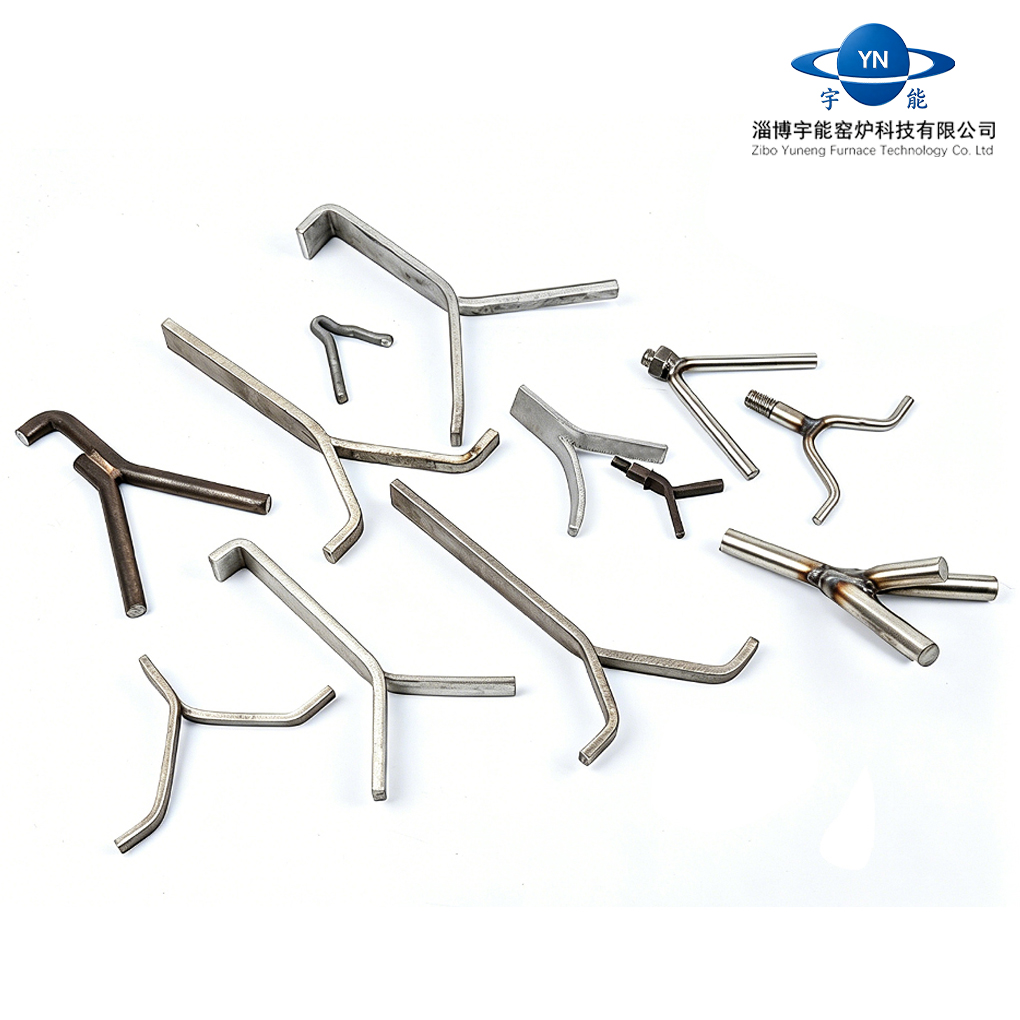
Wear and corrosion resistant castable for chemical industry furnaces is a high-performance refractory material
designed to withstand severe mechanical wear, chemical attack, thermal shock, and aggressive process conditions.
In chemical industry furnaces, reactors, incinerators, reformers, heaters, and other high-temperature units,
refractory linings are exposed to a combination of abrasion, alkali attack, acid corrosion, slag penetration,
gas erosion, and repeated heating and cooling cycles. Standard refractory concrete or conventional castables
often fail too quickly under these demanding conditions, which is why wear and corrosion resistant castable
solutions are widely used in modern industrial furnace linings.
This type of castable refractory is formulated to deliver long service life, stable mechanical strength, and
superior resistance to corrosive media. It is commonly used in areas where the lining must survive direct contact
with raw materials, dust-laden gas streams, clinker, ash, molten salts, acidic vapors, or chemically aggressive
furnace atmospheres. For chemical processing plants, the correct choice of wear and corrosion resistant castable
can reduce maintenance downtime, improve safety, lower energy loss, and support continuous operation.
Wear and corrosion resistant castable is a monolithic refractory material made from carefully selected refractory
aggregates, fine powders, binders, and performance-enhancing additives. Unlike shaped refractory bricks, castables
are installed by pouring, casting, vibrating, pumping, or gunning into place. After curing and firing, the castable
forms a dense, durable lining with strong resistance to abrasion and chemical deterioration.
The term “wear resistant” refers to the ability of the castable to resist mechanical damage caused by particle
impact, movement of solids, turbulence, or material flow. The term “corrosion resistant” refers to the ability to
resist attack by acids, alkalis, salts, slags, fumes, and reactive chemical compounds. In chemical industry furnaces,
both properties are often required at the same time, especially in feed zones, burner areas, cyclone separators,
ducts, kiln inlets, and waste gas treatment chambers.
Chemical industry furnaces operate under harsh conditions that are more complex than many standard thermal
processing environments. These furnaces may handle corrosive feedstocks, dusting solids, volatilized chemicals,
reducing or oxidizing atmospheres, and rapid temperature fluctuations. In such settings, refractory linings are
vulnerable to:
A properly selected wear and corrosion resistant castable helps protect the furnace shell, maintain heat retention,
and reduce unplanned shutdowns. It also helps preserve process efficiency by minimizing lining damage that could
lead to heat loss, product contamination, or structural failure.
The main advantage of wear and corrosion resistant castable for chemical industry furnaces is its ability to combine
multiple forms of protection in one lining system. This makes it highly suitable for aggressive industrial service
where both abrasion and chemical attack are present.
| Performance Advantage | Description | Typical Benefit in Furnace Service |
|---|---|---|
| High Wear Resistance | Resists erosion from solids, dust, and high-speed gas flow | Longer lining life in feed and impact zones |
| Strong Corrosion Resistance | Withstands acidic, alkaline, and salt-based chemical attack | Reduced degradation in chemically active atmospheres |
| Thermal Shock Resistance | Maintains integrity during sudden temperature changes | Lower risk of cracking and spalling |
| High Mechanical Strength | Provides durable monolithic structure after curing | Improved stability under operational stress |
| Dense Microstructure | Limits penetration of corrosive agents and molten phases | Enhanced service life and lower maintenance frequency |
| Monolithic Installation | Can be cast into complex shapes and repair areas | Flexible installation in difficult furnace geometries |
Wear and corrosion resistant castable is widely used in chemical industry furnace systems where both abrasion and
chemical exposure are significant. Common applications include:
In each of these applications, the lining must not only survive heat but also resist the combined effects of solids
abrasion, corrosive vapors, and thermal stress. This is why dense, low-porosity, high-strength castables are often
preferred.
The performance of wear and corrosion resistant castable depends largely on its raw material design. Although exact
formulations vary by service condition, most high-quality systems include a combination of the following:
| Component | Function | Common Material Examples |
|---|---|---|
| Refractory Aggregates | Provide structural backbone and high-temperature stability | High-alumina, mullite, bauxite, tabular alumina, silicon carbide |
| Fine Powders | Fill voids and improve packing density | Micronized alumina, silica fume, reactive alumina |
| Binders | Hold the castable together before and after setting | Calcium aluminate cement, chemical bond systems, phosphate binders |
| Additives | Enhance flow, strength, corrosion resistance, and setting behavior | Dispersants, deflocculants, antioxidants, fibers |
| Anti-Wear Enhancers | Improve erosion resistance in high-velocity zones | Silicon carbide, hard alumina, ceramic particles |
| Anti-Corrosion Enhancers | Reduce chemical penetration and attack | Low-cement formulations, dense matrix technology, fine sealing powders |
Different furnace environments require different castable systems. Selecting the proper type is critical for
achieving the best combination of wear resistance, corrosion resistance, strength, and installation performance.
| Castable Type | Main Features | Typical Use Cases |
|---|---|---|
| High-Alumina Castable | Good strength, heat resistance, and general corrosion resistance | General furnace linings, ducts, burner areas |
| Low-Cement Castable | Low porosity, high density, improved chemical resistance | Cyclones, process furnaces, corrosive zones |
| Ultra-Low Cement Castable | Very dense structure and excellent performance in harsh service | Severe corrosion and erosion areas |
| Phosphate Bonded Castable | Strong bonding and good resistance to certain chemical attacks | Special process furnaces, repair linings |
| Silicon Carbide Castable | Outstanding wear resistance and thermal conductivity | Abrasion-prone and gas erosion zones |
| Dense Low-Porosity Castable | Limits liquid and vapor penetration | Acidic or salt-rich chemical atmospheres |
When selecting wear and corrosion resistant castable for chemical industry furnaces, buyers and engineers typically
review a set of technical properties. These properties help determine whether the material is suitable for the
expected thermal, mechanical, and chemical conditions.
| Property | What It Measures | Why It Matters |
|---|---|---|
| Bulk Density | Mass per unit volume of the castable | Higher density often indicates lower porosity and better corrosion resistance |
| Cold Crushing Strength | Resistance to compressive load at room temperature | Shows mechanical durability before and after installation |
| Modulus of Rupture | Flexural strength under bending stress | Indicates ability to resist cracking and handling damage |
| Permanent Linear Change | Dimensional stability after firing | Important for fit, expansion, and long-term stability |
| Apparent Porosity | Open pore volume in the hardened lining | Lower porosity means less chemical penetration |
| Refractoriness | Ability to retain structure at high temperatures | Necessary for furnace service in hot zones |
| Abrasion Resistance | Ability to withstand particle wear and scouring | Critical in material flow and gas stream areas |
| Corrosion Resistance | Resistance to chemical or slag attack | Essential for chemical industry furnaces |
The following table provides a general specification reference for wear and corrosion resistant castable used in
chemical industry furnaces. Actual values vary depending on formulation, application temperature, and installation
method.
| Specification Item | Typical Range | Remarks |
|---|---|---|
| Alumina Content (Al2O3) | 45% - 95% | Higher alumina generally improves strength and heat resistance |
| Bulk Density | 2.1 - 3.2 g/cm³ | Dense formulations usually offer better wear and corrosion performance |
| Apparent Porosity | 6% - 18% | Lower porosity helps resist chemical penetration |
| Cold Crushing Strength | 40 - 120 MPa | Depends on cement level and aggregate quality |
| Modulus of Rupture | 6 - 20 MPa | Important for handling and service durability |
| Maximum Service Temperature | 1200°C - 1800°C | Depends on raw materials and furnace atmosphere |
| Linear Change After Firing | −0.1% to +0.5% | Stable products show minimal dimensional variation |
| Installation Method | Casting, gunning, pumping, ramming | Selected according to project requirements |
Several design factors contribute to the performance of wear and corrosion resistant castable. Understanding these
factors helps explain why some castables last longer than others in chemical industry furnaces.
Chemical industry furnaces may be exposed to a wide range of corrosive substances. The exact attack mechanism depends
on the process chemistry, operating temperature, and gas composition. Common corrosive agents include:
| Corrosive Agent | Source in Chemical Furnaces | Potential Effect on Refractory Lining |
|---|---|---|
| Acidic Vapors | Organic acids, sulfur compounds, chlorine-based fumes | Surface decomposition and penetration |
| Alkaline Compounds | Alkali dust, sodium or potassium-bearing feed materials | Fluxing and matrix weakening |
| Molten Salts | Process by-products and salt-rich residues | Infiltration, softening, and cracking |
| Slag | Reaction residue or fused impurities | Chemical erosion and penetration |
| Reducing Gas Atmosphere | Combustion imbalance or process gas composition | Altered refractory stability and bonding |
| Oxidizing Gas Atmosphere | Air-rich combustion or oxidative processing | Accelerated wear in vulnerable materials |
The performance of wear and corrosion resistant castable depends not only on material chemistry but also on proper
installation. Even the best castable can fail prematurely if it is mixed incorrectly, placed poorly, or dried too
quickly. Best practices usually include:
For high-performance chemical furnace linings, installation quality is often just as important as raw material
selection. Good workmanship supports full material density, better bonding, and consistent long-term protection.
Compared with standard refractory concretes or lower-grade linings, wear and corrosion resistant castable offers
several important performance advantages in chemical industry furnaces.
| Comparison Area | Wear and Corrosion Resistant Castable | Conventional Refractory Castable |
|---|---|---|
| Service Life | Typically longer in harsh zones | Often shorter under aggressive conditions |
| Chemical Resistance | Designed for acidic, alkaline, and salt attack | May degrade faster in corrosive service |
| Wear Resistance | Optimized for abrasion and erosion | May wear rapidly in particle-rich areas |
| Density | Usually higher and more tightly packed | May have higher porosity |
| Maintenance Frequency | Reduced when properly selected and installed | May require more frequent repair |
| Applicability | Suitable for severe furnace environments | Better for lighter-duty thermal service |
Choosing the right wear and corrosion resistant castable requires an evaluation of furnace conditions and process
goals. Important selection criteria include:
For example, a furnace zone exposed to both high-speed solids and alkali-rich dust may need a denser, harder,
silicon carbide enhanced castable. A zone exposed mainly to corrosive vapors may benefit more from a low-porosity,
chemically stable formulation. In many projects, different castable grades are used in different furnace sections
to balance performance and cost.
One of the strongest reasons to use wear and corrosion resistant castable in chemical industry furnaces is the
maintenance benefit. A durable lining can extend the time between shutdowns, reduce emergency repairs, and support
predictable production scheduling. It also helps protect adjacent equipment from heat leakage and structural damage.
In addition, improved lining durability can reduce the risk of product contamination caused by refractory
breakdown. This is especially important in chemical processing, where purity and process consistency are often
essential. A stable refractory lining contributes to safer operation, lower lifecycle cost, and better overall
equipment reliability.
For industry pages, category pages, and technical blogs, related SEO terms can be incorporated naturally throughout
the content. Examples include:
Understanding basic refractory terminology can help readers compare materials more effectively.
| Term | Meaning |
|---|---|
| Refractory | A material that can withstand very high temperatures without losing structural performance |
| Castable | A monolithic refractory that is installed in a fluid or semi-fluid state |
| Monolithic Lining | A continuous refractory lining with fewer joints than brick systems |
| Abrasion Resistance | The ability to resist surface wear from moving particles or solids |
| Corrosion Resistance | The ability to resist chemical attack from gases, liquids, salts, or slags |
| Thermal Shock Resistance | The ability to survive sudden temperature changes without cracking |
Wear and corrosion resistant castable for chemical industry furnaces is a critical refractory solution for severe
operating environments. It is engineered to resist abrasion, chemical attack, thermal shock, and penetration from
corrosive media while maintaining mechanical strength and dimensional stability. Because chemical furnaces often
face a combination of wear and corrosion mechanisms, dense and durable castable linings provide a practical and
cost-effective protection strategy.
By choosing the right formulation, evaluating key technical specifications, and ensuring proper installation,
operators can significantly improve furnace reliability and lining service life. Whether used in burner zones,
ducts, cyclones, reactors, or high-wear transition areas, wear and corrosion resistant castable remains one of the
most important materials for modern chemical industry furnace protection.
```



本网站使用 cookie 来确保您在我们的网站上获得最佳体验。

 English



 Whatsapp
 电话
电话
评论
(0)