
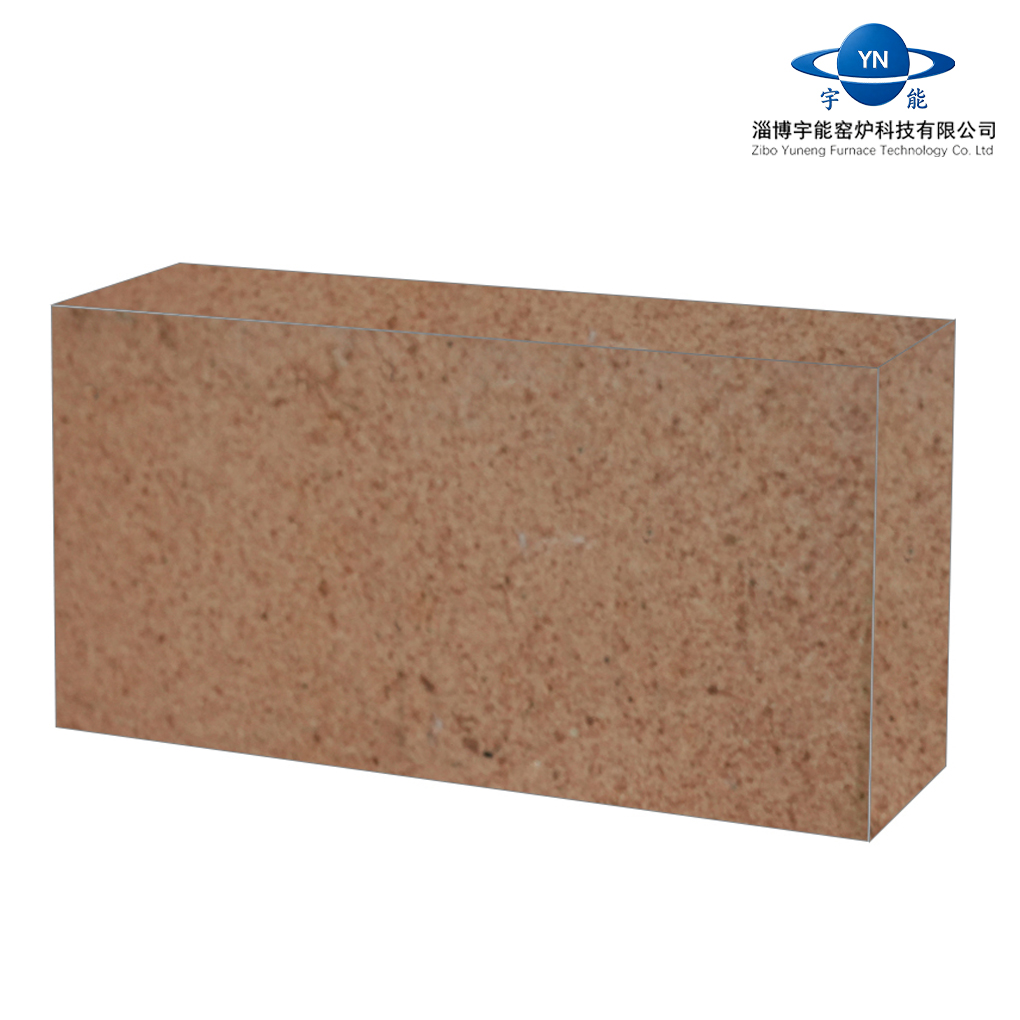
Fire clay large cutting brick is a widely used refractory material in ceramic kiln construction,
kiln lining, thermal insulation systems, and high-temperature industrial environments. Known for
its strong resistance to heat, stable performance, and practical cutting flexibility, this type of
brick plays an important role in ceramic production lines, tunnel kilns, shuttle kilns, roller
kilns, and other firing equipment. For manufacturers and engineers looking for a durable and
cost-effective refractory solution, fire clay large cutting brick offers a reliable balance of
thermal performance, machinability, and structural strength.
In modern ceramic kiln applications, the demand for refractory bricks is not only about high
temperature resistance. It is also about dimensional accuracy, ease of installation, energy
efficiency, service life, and compatibility with kiln design. Fire clay large cutting brick is
specifically valued because it can be cut and shaped to meet complex kiln structures while still
maintaining excellent refractory properties. This makes it a practical choice for many kiln
builders and ceramic industry operators.
Fire clay large cutting brick is a type of refractory brick made primarily from fire clay raw
materials, which are processed, molded, dried, and fired at high temperatures. The term “large
cutting brick” generally refers to a brick format designed for cutting, trimming, or machining
into customized dimensions according to kiln design requirements. Compared with standard
refractory bricks, large cutting bricks provide more flexibility during construction and
maintenance.
Fire clay itself is a naturally occurring refractory clay with good plasticity before firing and
strong heat resistance after sintering. Because of this material composition, fire clay bricks are
suitable for medium- and high-temperature applications, especially where thermal stability and
structural support are needed. In ceramic kilns, fire clay large cutting brick is commonly used in
hot-face linings, arch sections, supporting walls, flue areas, and transition zones.
Ceramic kilns operate under repeated thermal cycles, sudden temperature changes, flame exposure,
and mechanical stress. The refractory lining must withstand these conditions without cracking,
deforming, or losing strength too quickly. Fire clay large cutting brick is widely used in ceramic
kilns because it meets these practical requirements with a good combination of performance and
affordability.
These advantages make fire clay large cutting brick a practical refractory material for both new kiln
construction and kiln repair projects. Its widespread use in the ceramic industry is also driven by
its compatibility with different kiln sizes, firing zones, and operational requirements.
The performance of fire clay large cutting brick is determined by its raw materials, production
process, and firing temperature. Below are some of the most important characteristics that make it
suitable for ceramic kiln use.
| Feature | Description | Benefit in Ceramic Kilns |
|---|---|---|
| Refractoriness | Designed to withstand high temperatures without melting or deforming | Ensures stable kiln operation during long firing cycles |
| Thermal Shock Resistance | Resists damage from rapid temperature changes | Reduces cracking during start-up, shutdown, and firing fluctuations |
| Cutting Flexibility | Can be trimmed into special shapes and sizes | Improves fit for complex kiln structures |
| Mechanical Strength | Offers solid compressive strength after firing | Supports kiln load and structural durability |
| Wear Resistance | Provides resistance to abrasion and surface damage | Extends service life in high-contact areas |
| Thermal Stability | Retains performance under long-term exposure to heat | Helps maintain energy efficiency and process consistency |
Fire clay large cutting brick is used in a broad range of ceramic kiln applications. Its versatility
makes it suitable for many sections of kiln construction where high temperatures and structural
precision are important.
One of the most common uses is kiln lining. Fire clay large cutting brick provides a protective
refractory layer that shields the kiln shell from direct flame and intense heat. This helps improve
kiln safety, reduce heat loss, and prolong equipment life.
In the hottest parts of the kiln, the refractory lining must endure continuous thermal stress.
Fire clay large cutting brick is often used in these hot-face zones because of its reliable
high-temperature performance.
Kiln arches and dome sections often require special shaping. The large cutting format allows
installers to create custom dimensions that improve structural alignment and load distribution.
Fire clay large cutting brick is also used in flue pathways and gas circulation areas, where heat
exposure and airflow conditions can be demanding. The brick helps maintain structural integrity in
these critical kiln zones.
During kiln maintenance, large cutting bricks are useful for replacing damaged sections or adapting
existing structures. Their cut-to-fit nature helps reduce installation time and improve repair
accuracy.
For ceramic kiln operators, the main advantage of fire clay large cutting brick is its combination
of performance, flexibility, and cost control. It offers a practical refractory solution for
projects where both thermal resistance and dimensional customization are required.
| Advantage | Explanation | Industry Value |
|---|---|---|
| Customizable Dimensions | Can be cut to suit specific kiln layouts and designs | Improves construction accuracy and installation efficiency |
| Strong Heat Resistance | Performs well in repeated high-temperature cycles | Supports reliable ceramic firing processes |
| Good Cost Performance | Offers dependable refractory performance at a practical price point | Useful for large-scale kiln projects and budget-conscious builds |
| Widely Applicable | Suitable for many kiln types and heat zones | Increases material versatility across ceramic plants |
| Maintenance Friendly | Easier to replace and adjust than rigid special-shaped refractories | Reduces downtime during kiln servicing |
| Long Service Potential | Can provide durable performance under proper operating conditions | Supports long-term kiln stability |
Fire clay large cutting brick is generally produced from selected fire clay, refractory binders,
and carefully controlled additives. The exact composition may vary depending on intended
application, but the goal is usually to achieve a stable balance between refractoriness,
strength, and processability.
The manufacturing process typically includes raw material selection, crushing, mixing, molding,
drying, high-temperature firing, and quality inspection. In some cases, the bricks are produced in
larger formats to allow for cutting or machining into the desired shapes. This makes the product
especially useful in customized kiln design.
The specific technical values of fire clay large cutting brick may differ by formulation and
manufacturer, but industry buyers often evaluate several common properties before selection.
| Property | General Description | Importance |
|---|---|---|
| Alumina Content | Usually present in moderate levels in fire clay refractories | Affects refractoriness and strength |
| Refractoriness | Measures the ability to resist softening at high temperature | Critical for kiln lining performance |
| Bulk Density | Indicates material compactness and mass per unit volume | Influences strength and insulation behavior |
| Cold Crushing Strength | Shows resistance to mechanical pressure at room temperature | Important for handling and installation durability |
| Apparent Porosity | Reflects the volume of open pores in the brick | Impacts thermal behavior and absorption |
| Thermal Expansion | Describes dimensional change under heat | Helps assess kiln compatibility and cracking risk |
The following table provides a general reference for fire clay large cutting brick used in ceramic
kilns. Actual specifications should be confirmed according to project requirements, kiln design,
and product standards.
| Item | Typical Range / Value | Notes |
|---|---|---|
| Material Type | Fire clay refractory brick | General-purpose kiln refractory material |
| Shape | Large cutting format | Designed for custom trimming and fitting |
| Operating Temperature | Medium to high temperature applications | Depends on specific formulation and kiln conditions |
| Color | Light yellow, brown, or reddish tones | Varies by raw material and firing method |
| Surface Finish | Dense and rigid after firing | Suitable for kiln lining and structural use |
| Customization | Cutting, sizing, shaping available | Useful for non-standard kiln structures |
Choosing the right fire clay large cutting brick requires attention to kiln temperature, firing
atmosphere, structural design, and maintenance expectations. Buyers should consider the following
factors when evaluating suitable refractory materials.
For ceramic kiln engineers, the right refractory brick selection can significantly affect kiln
performance, product quality, and maintenance intervals. Fire clay large cutting brick is often
selected when flexibility and affordability are both important.
Proper installation is essential for achieving the best performance from fire clay large cutting
brick. Even a high-quality refractory brick can fail prematurely if it is installed incorrectly or
exposed to poor kiln operating practices.
Inspect the bricks for size consistency, surface defects, and transport damage. Verify that the
planned cutting dimensions match the kiln drawing and structural layout.
Use appropriate refractory mortars and allow for thermal expansion joints where required. Ensure
alignment, joint thickness, and support conditions meet engineering specifications.
Follow a controlled drying and heating schedule before full kiln operation. This helps prevent
moisture-related cracking and improves long-term performance.
Although both products are used in high-temperature construction, fire clay large cutting brick
offers greater dimensional flexibility. Standard refractory bricks are often used in uniform wall
builds, while large cutting bricks are better suited to special areas that require customized
sizing.
| Comparison Point | Fire Clay Large Cutting Brick | Standard Refractory Brick |
|---|---|---|
| Shape Flexibility | High | Moderate |
| Customization | Excellent for cutting and fitting | Limited to standard sizes |
| Kiln Application | Complex and specialized kiln sections | General lining and wall construction |
| Installation Adaptability | High | Moderate |
| Typical Use | Ceramic kilns, arches, transitions, repairs | Common refractory masonry structures |
The service life of fire clay large cutting brick depends on operating temperature, kiln loading,
firing schedule, installation quality, and maintenance practices. Regular inspection can help
identify wear, cracks, joint degradation, and hot spots before they lead to major downtime.
Good maintenance practices include monitoring kiln temperature uniformity, avoiding unnecessary
thermal shock, checking mortar joints, and replacing damaged bricks in a timely manner. When
properly selected and installed, fire clay large cutting brick can offer dependable performance in
ceramic kiln service.
The following keyword phrases are commonly associated with this topic and may help improve search
visibility when used naturally in content:
It is suitable for many ceramic kiln applications, especially where cutting flexibility and
refractory stability are required. However, final selection should depend on kiln temperature,
structure, and operating conditions.
Yes. The large cutting format is specifically designed to allow trimming, shaping, and customized
fitting for complex kiln layouts.
It provides strong heat resistance, structural stability, and practical installation flexibility,
making it a dependable lining material for ceramic kilns.
When properly installed, refractory lining materials can help reduce heat loss and support more
stable kiln performance, which may contribute to better efficiency.
Fire clay large cutting brick is a versatile and widely used refractory solution for ceramic kilns.
With its strong heat resistance, customizable format, and reliable performance, it supports a wide
range of kiln construction and maintenance needs. From kiln lining and arch sections to flue areas
and repair work, this material remains an important choice in the ceramic industry.
For blog pages, directory pages, industry articles, and SEO-focused kiln material content, fire
clay large cutting brick is a strong keyword topic because it combines technical relevance,
commercial search intent, and broad application value. Industry buyers and kiln engineers often
look for detailed information about refractory performance, specification ranges, and application
benefits, making this subject highly suitable for search-engine-friendly content.
```



本网站使用 cookie 来确保您在我们的网站上获得最佳体验。

 English



 Whatsapp
 电话
电话
评论
(0)