
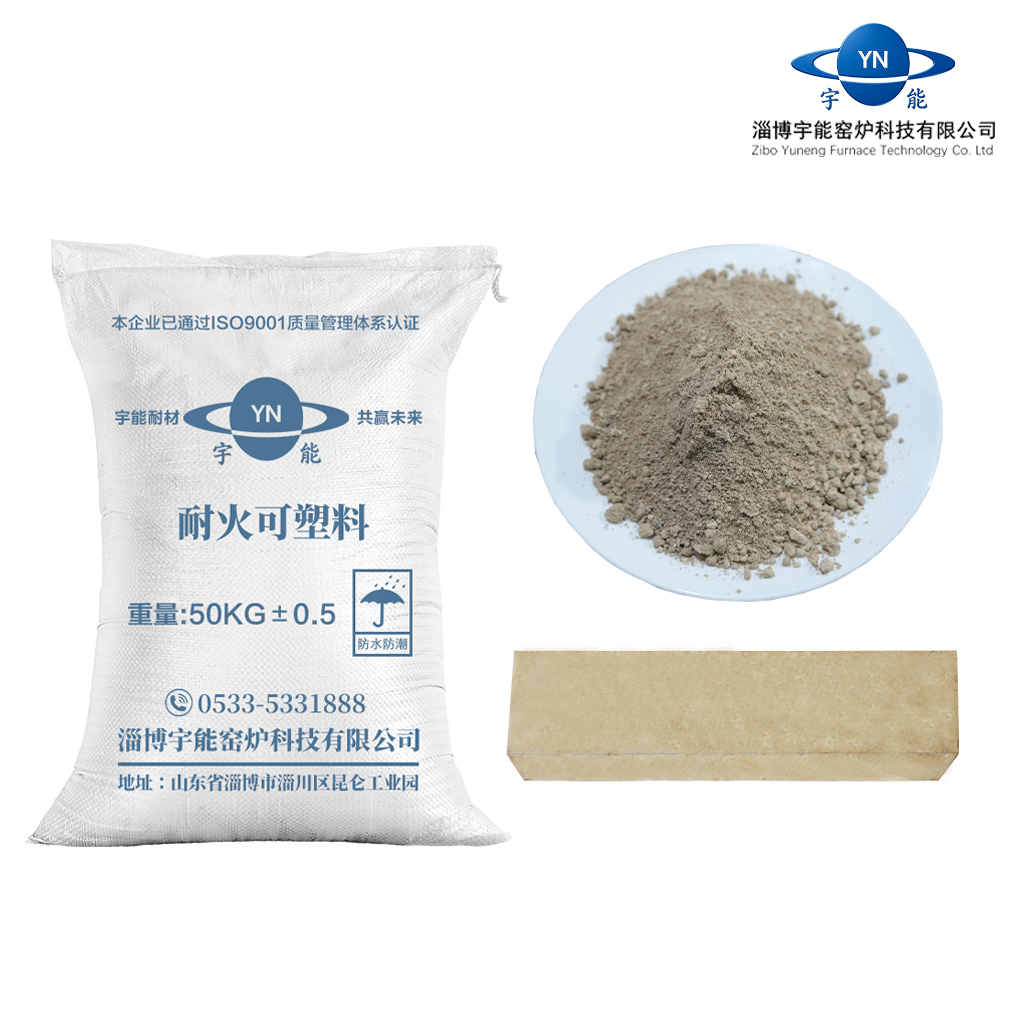
Lightweight thermal insulation castable is a specialized refractory material designed to reduce heat loss, improve
thermal efficiency, and support long-term energy saving in high-temperature industrial environments. It is widely
used in furnaces, kilns, boilers, incinerators, heaters, and other thermal processing equipment where heat
preservation is critical. Compared with dense refractory castables, lightweight thermal insulation castable
offers lower bulk density, lower thermal conductivity, and better heat retention performance, making it an
important material for energy-saving lining systems.
In modern industrial thermal systems, energy efficiency is not only a cost issue but also a sustainability issue.
Every reduction in heat loss can directly influence fuel consumption, operating temperature stability, equipment
lifespan, and environmental performance. Lightweight thermal insulation castable is therefore increasingly used
in heat preservation layers, backup insulation layers, and monolithic insulation structures to improve overall
furnace efficiency.
Lightweight thermal insulation castable is a castable refractory material formulated with lightweight aggregates,
insulating fillers, bonding systems, and heat-resistant additives. It is mixed with water on site, poured or
troweled into place, and then cured and dried before operation. Unlike dense castables that prioritize mechanical
strength and erosion resistance, lightweight thermal insulation castables are engineered mainly for heat
preservation and energy saving.
The core function of this material is to reduce thermal transfer from the hot face to the outer shell. By
combining a porous internal structure with insulating raw materials, the castable helps maintain internal
temperature while limiting heat dissipation. This makes it highly suitable for applications where thermal
insulation performance is more important than high abrasion resistance.
Heat preservation is one of the most effective ways to improve industrial energy efficiency. In high-temperature
systems, a significant amount of fuel is lost through wall conduction, shell radiation, and structural heat
leakage. Lightweight thermal insulation castable helps address these losses by creating an effective thermal
barrier.
When used as an insulation lining or backup layer, the material reduces surface temperature, lowers heat flux, and
minimizes unnecessary energy consumption. This can lead to multiple operational benefits, including lower fuel
use, better temperature stability, reduced equipment stress, and improved worker safety.
In energy-intensive industries, even small improvements in insulation performance can produce measurable cost
savings over time. For this reason, lightweight thermal insulation castable is often selected as part of an
integrated heat preservation system rather than as a standalone material.
| Feature | Technical Meaning | Energy Saving Benefit |
|---|---|---|
| Low Bulk Density | Material contains lightweight aggregates and porous structure | Reduces heat storage and improves insulation efficiency |
| Low Thermal Conductivity | Slower heat transfer through the lining | Helps retain heat inside the equipment |
| Good Workability | Can be mixed, poured, or placed with ease | Supports fast installation and efficient construction |
| Thermal Shock Resistance | Can tolerate repeated heating and cooling cycles | Reduces lining failure and maintenance energy costs |
| Stable Volume at High Temperature | Maintains shape and performance under heat exposure | Preserves insulation effectiveness over time |
| Monolithic Construction | Seamless installation without many joints | Minimizes thermal bridging and heat leakage |
The main advantage of lightweight thermal insulation castable is its ability to preserve heat effectively.
By slowing down heat transfer, it helps keep furnace or kiln temperatures stable and reduces energy losses through
the lining. This performance is especially valuable in cyclic heating processes, where repeated temperature
changes can otherwise waste significant energy.
Better insulation means less fuel is needed to reach and maintain target temperatures. In many thermal systems,
fuel savings can be achieved simply by improving the performance of the hot-face and backup insulation layers.
Lightweight thermal insulation castable helps reduce the thermal load on the heating system and supports lower
operating costs.
A properly designed insulation lining can significantly reduce the external shell temperature of industrial
equipment. This improves safety for operators and reduces heat stress on surrounding structures. Lower shell
temperature also indicates that less heat is escaping to the environment.
Because it is a castable material, lightweight thermal insulation castable can be installed in complex shapes,
curved sections, and irregular furnace areas. It is especially useful where bricks or prefabricated shapes are
difficult to apply. This flexibility helps engineers design efficient insulating linings in many different thermal
systems.
Thermal efficiency is not determined by only one layer or one material. It depends on the entire lining structure.
Lightweight thermal insulation castable contributes to a more efficient system by reducing thermal losses through
the lining. This allows the equipment to operate closer to the intended temperature profile with less wasted
heat.
Insulation materials that perform consistently over time can reduce repair frequency, shutdown duration, and
maintenance complexity. Since lightweight thermal insulation castable is a monolithic lining material, it can
reduce joint-related failure points and support more stable long-term operation.
Lightweight thermal insulation castable is widely used in high-temperature industrial sectors where heat
preservation and energy saving are essential. Common application areas include:
In these environments, the castable is generally used as an insulation layer rather than the direct working face.
In many lining systems, it is combined with dense refractory castables, insulating bricks, fiber modules, or
backup board materials to create a layered thermal protection structure.
Heat preservation depends on controlling conduction, convection, and radiation. Lightweight thermal insulation
castable mainly helps reduce conduction by using porous structure and low-conductivity raw materials. The trapped
air within its microstructure acts as an insulating medium, slowing heat movement from the hot interior to the
cooler exterior.
In a well-designed lining system, the castable also contributes to lower thermal bridging. Since it is a
monolithic material, it eliminates many gaps and mortar joints that may otherwise become heat leakage paths.
This creates a more uniform thermal barrier and improves the consistency of insulation performance.
In addition, its relatively low thermal mass helps reduce the amount of energy required during startup and
reheating. Equipment with lower thermal storage can often reach operating temperature faster, which is beneficial
in batch processes and intermittent production schedules.
The exact formulation of lightweight thermal insulation castable may vary depending on temperature rating,
application environment, and required mechanical strength. However, common raw material categories include:
| Raw Material Category | Main Function | Typical Contribution |
|---|---|---|
| Lightweight Aggregates | Provide porous structure and reduce density | Lower weight and improved insulation |
| Insulating Fillers | Improve thermal resistance | Reduce thermal conductivity |
| Binding Agents | Hold the castable structure together | Strength and installation integrity |
| Refractory Powders | Improve heat resistance | Higher operating temperature capability |
| Functional Additives | Adjust setting, flow, and performance | Better workability and durability |
Common lightweight aggregate options may include expanded materials or porous refractory particles, while the
binder system can be based on hydraulic, chemical, or high-temperature resistant bonding technologies. The final
design depends on whether the material is intended for medium-temperature insulation or higher-temperature
service.
The following table provides a general specification reference for lightweight thermal insulation castable. Actual
values can vary by formulation and use conditions.
| Property | Typical Range | Notes |
|---|---|---|
| Bulk Density | 0.8 to 1.8 g/cm³ | Lower density usually means better insulation |
| Thermal Conductivity | 0.20 to 0.60 W/m·K | Measured at elevated temperature depending on test method |
| Cold Crushing Strength | 2 to 15 MPa | Depends on density and binder system |
| Service Temperature | 1000°C to 1400°C | Higher grades may exceed this range |
| Linear Change on Heating | Controlled shrinkage or slight expansion | Important for structural stability |
| Water Addition for Mixing | About 10% to 18% | Varies by product design and application method |
| Installation Method | Poured, ramming, or troweled | Depends on site requirements |
| Drying Requirement | Required before full heat-up | Prevents steam damage and cracking |
Lower density generally improves insulation performance because the material contains more air-filled pores.
However, a balance is needed between low density and sufficient mechanical strength.
The most direct indicator of insulation performance is thermal conductivity. The lower the conductivity, the
better the material can resist heat transfer.
High controlled porosity can improve heat preservation, but excessive or unstable porosity may weaken the material.
The ideal structure uses uniform pores that remain stable under operating conditions.
A stable binder system helps preserve structural integrity during drying, startup, and repeated heat cycling.
If the binder degrades too quickly, the insulation layer may lose performance.
Even a well-formulated castable may underperform if it is poorly mixed, improperly cured, or unevenly installed.
Correct site application is critical for full energy-saving benefit.
| Material Type | Main Strength | Main Limitation | Energy Saving Role |
|---|---|---|---|
| Lightweight Thermal Insulation Castable | Low density, good insulation, monolithic application | Lower wear resistance than dense refractories | Excellent for backup insulation and heat preservation |
| Dense Castable | High strength and abrasion resistance | Higher thermal conductivity | Better for working face, not primary insulation |
| Insulating Brick | Low weight and predictable shape | More joints and slower installation in complex areas | Good insulation, but less flexible than castable |
| Ceramic Fiber Products | Very low thermal conductivity | Lower structural rigidity and different service limits | Strong insulation for specific temperature zones |
This comparison shows that lightweight thermal insulation castable is often chosen when both insulation and
structural continuity are needed. It is especially attractive where a seamless lining is preferred and where
complex shapes require a cast-in-place solution.
Proper installation is essential for achieving the expected heat preservation and energy saving performance.
General steps usually include surface cleaning, formwork preparation, dry material mixing, controlled water
addition, thorough blending, casting or placement, compaction when needed, curing, and drying.
During installation, the following points are important:
If the material is heated too quickly after installation, internal moisture can expand rapidly and cause cracking,
spalling, or strength loss. Therefore, drying and startup procedures are critical parts of the energy-saving
system.
Choosing the right insulation castable depends on operating temperature, mechanical stress, environment, and
energy-saving target. Important selection factors include:
| Selection Factor | What to Consider |
|---|---|
| Operating Temperature | Ensure the material can withstand the maximum service temperature |
| Heat Loss Target | Determine the required insulation level for the application |
| Mechanical Load | Assess whether the lining must support structural stress |
| Thermal Cycling Frequency | Choose a formulation with suitable thermal shock resistance |
| Installation Method | Confirm whether pouring, troweling, or ramming is needed |
| Moisture and Chemical Exposure | Check resistance to steam, gas, slag, or process atmosphere |
A properly selected lightweight thermal insulation castable should support both insulation efficiency and long-term
service stability. In most industrial projects, material choice should be based on the complete lining design
rather than on a single property.
The practical value of lightweight thermal insulation castable becomes clear during long-term operation. By
reducing heat escape, the material helps lower fuel input and stabilize process temperatures. This often results
in improved productivity, more uniform product quality, and better temperature control.
Lower heat loss also means the outer shell and nearby structures remain cooler. This can reduce the need for
auxiliary cooling, lower workplace temperature, and improve operational comfort. Over time, a more efficient
insulation system can also help extend the service life of metal shells, anchors, and adjacent construction
components.
In energy-sensitive industries, insulation performance is closely related to environmental goals. Reducing thermal
loss means less fuel combustion, lower carbon emissions, and better compliance with modern efficiency standards.
For SEO and content structuring purposes, the following keyword phrases are highly relevant to this topic:
These keywords can be naturally integrated into headings, paragraphs, product category pages, and technical blog
articles to support search visibility and topical relevance.
Lightweight thermal insulation castable is a valuable refractory material for heat preservation and energy saving
in high-temperature industrial equipment. Its low density, low thermal conductivity, monolithic installation
advantages, and stable insulating performance make it a preferred choice for backup linings, insulation layers,
and thermal efficiency upgrades.
When properly selected and correctly installed, it can reduce fuel consumption, improve temperature stability,
lower shell temperatures, and support long-term operating efficiency. For industries focused on energy saving,
thermal control, and cost reduction, lightweight thermal insulation castable remains an important material
solution in modern refractory systems.
```



本网站使用 cookie 来确保您在我们的网站上获得最佳体验。

 English



 Whatsapp
 电话
电话
评论
(0)